
Dutch mortgage market 2025
After strong growth in the first quarter of 2025, the mortgage market surpassed the 900‑billion mark in the second quarter. This represented the largest net increase since the first half of 2021. The upward trend continued into the third quarter, with the market reaching 924 billion.
A total of 563,582 mortgage applications were submitted via the HDN Platform, an increase of 16.5% compared to 2024. This continued the growth that had already become cautiously apparent in 2024. Of all applications in 2025, 61% related to the purchase of a home. 39% of the applications were submitted for refinancing and further advances and other mortgage loan adjustments.
NHG-backed mortgages continued to lag slightly
The share of NHG-backed mortgages continued to lag slightly behind the overall market growth, despite increased sales of affordable rental properties.
In the first three quarters of 2025, 91,700 first-time buyers and movers obtained a mortgage with NHG, up from 78,400 during the same period in 2024 an increase of nearly 17%, driven primarily by higher transaction volumes. Even so, NHG’s overall market share edged down from 45.3% to 44.5% as is observed every year as a result of increasing house prices and an NHG eligibility maximum which is only adjusted on the 1st of January each year. The difference between firsttime buyers and movers remains significant: 67.5% of first-time buyers choose NHG, compared to only 19% of movers. This reflects the fact that first-time buyers are more likely to purchase homes priced below the NHG limit, whereas movers typically buy more expensive properties.
Sustainability
A notable development is the decline in the number of mortgage applications that include financing for energy-saving measures. In 2025, only 12.5% of applications incorporated energyefficiency investments, representing a 16% decrease compared with the previous year. Despite this drop in explicitly sustainability-linked financing, homeowners’ overall willingness to invest in their properties remains strong. In 2025, HDN recorded nearly 100,000 mortgage applications from renovators. Renovation projects typically include improvements that enhance energy performance, indicating that sustainability measures continue to play an important role, even if they are less frequently financed through dedicated mortgage components.
Development mortgage rates
Fixed mortgage rates increased during the early months of 2025, driven largely by financial‑market volatility following President Trump’s inauguration and the implementation of substantial trade tariffs. After stabilizing from April onward, for most of 2025, the rates remained relatively stable. Fixed-rate periods of 5 to 10 years, hovered around 3.5%.
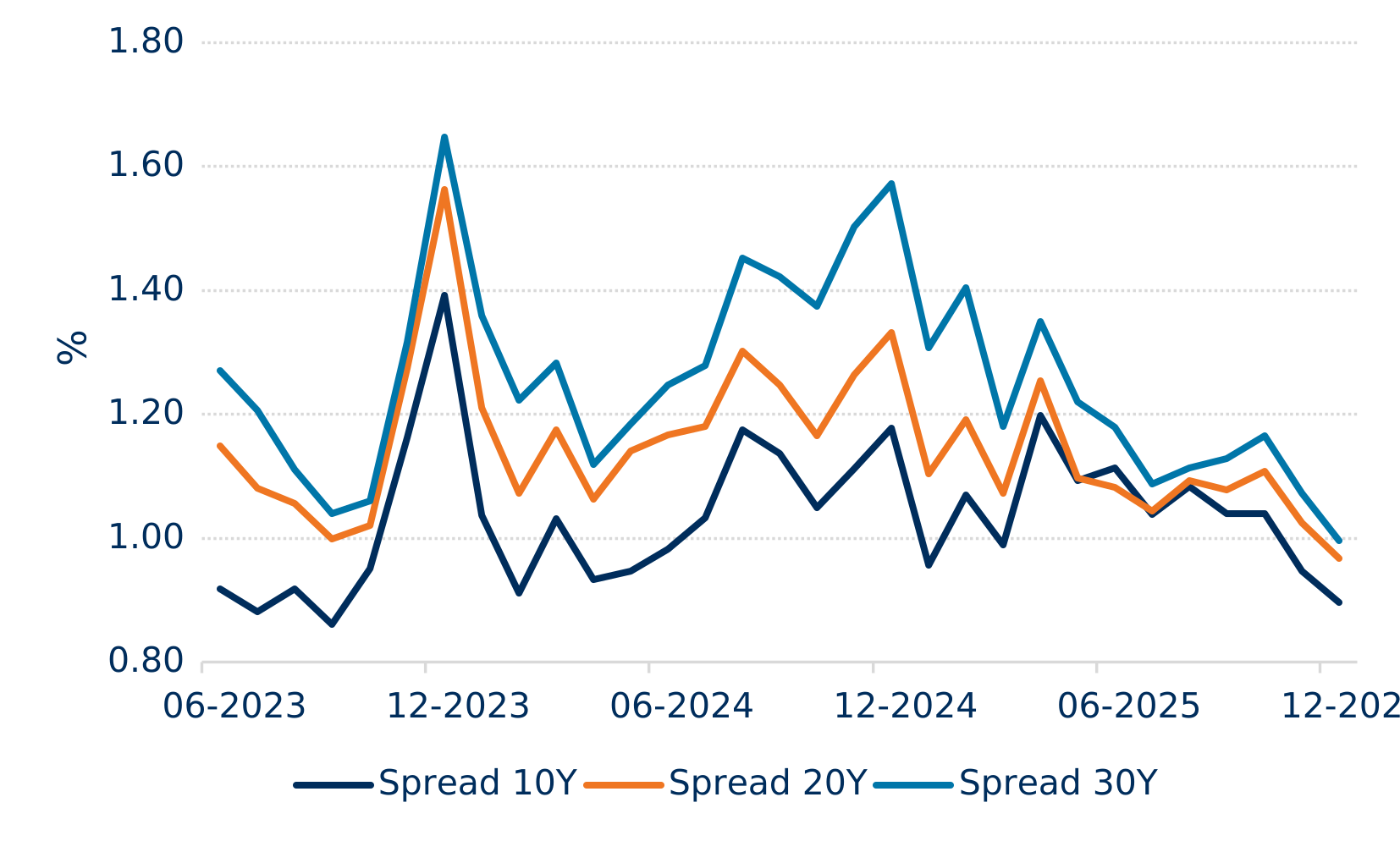
Toward the end of 2025, however, most banks increased mortgage rates. This development followed a rise in longterm government bond yields, reflecting higher capital‑market yields fuelled by growing government debt. In past years Dutch mortgages have continued to offer an appealing proposition for investors seeking low‑risk assets with solid returns of around 150 basis points spread over swap for 30‑year fixed-rate mortgages at 100% LTV. Naturally, shorter fixed‑rate periods and lower loan‑to‑value segments, such as NHG‑backed mortgages, are associated with tighter spreads.
During the second half of 2025, persistent upward pressure on swaps rates created a challenging backdrop for mortgage spreads, leading to broadbased compression across the market. This tightening was largely driven by the natural lag between movements in swap rates and the adjustment of mortgage rates.
Figure 3.1: Average spread above Swap (Top 5)
Source: IEX, Renteadministratie.nl and DMPM Analytics
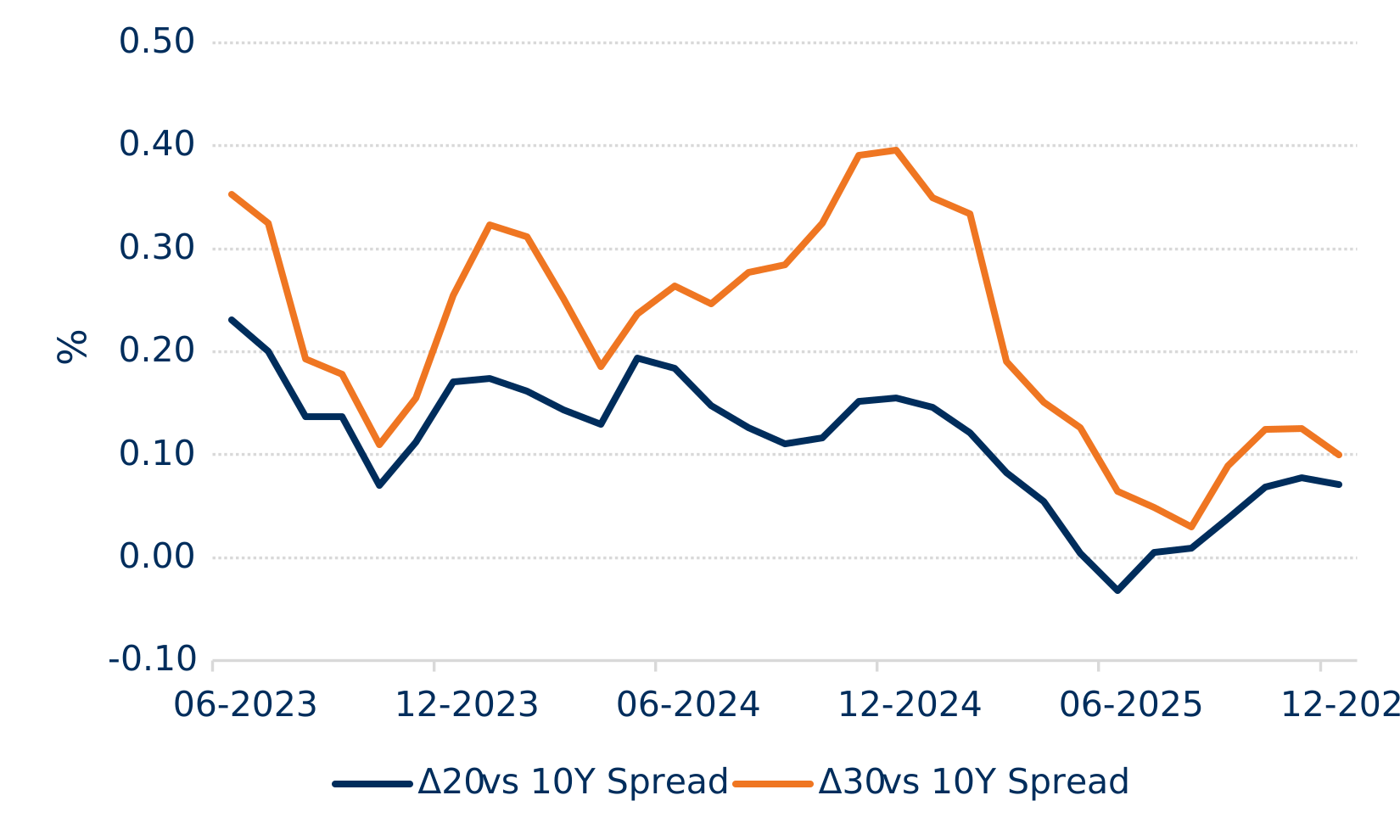
Overall, spreads in 2025 declined especially compared to the fourth quarter of 2024. Notably, spreads on 20- year and 30-year fixed-rate mortgages contracted more sharply than those on 10-year. As a result, spreads across these three fixed-rate buckets have converged, now clustering around 100 basis points over swap. This convergence has translated into lower spread over swap returns for mortgage investors.
Figure 3.2: Delta spread 20 & 30 year vs 10 year
Source: IEX, Renteadministratie.nl and DMPM Analytics
Although mortgage lenders can partly offset this rise by accepting a lower interest margin, their ability to do so is limited resulting in rising mortgage interest rates.
The move toward shorter-term contracts continues
Beyond broad market conditions, the mortgage rate paid by an individual borrower is determined primarily by two factors: the loan’s risk class and the length of the fixed-interest period.
Higherrisk loans (higher LTV’s) and longer fixed-rate terms generally dictate higher mortgage rates.
From 2019 through mid-2022, borrowers strongly favoured long fixed-rate periods of 20 to 30 years. However, starting in the second quarter of 2022, the sharp increase in mortgage rates led many borrowers to shift toward shorter terms in an effort to keep monthly payments more affordable. In 2025, approximately 82% of new mortgage applications fall within the 1 to 10-year fixed-rate.
Credit risk remains low
The average loan-to-value (LTV) ratio for new mortgages has declined from 91.8% at the start of 2020 to 87.9% currently. This ratio varies significantly by age group. Younger homebuyers (under 35) had an average LTV ratio of 90.9% in the first half of 2025, reflecting the prevalence of first-time buyers in this age group who have not yet accumulated home equity. Older homebuyers, who have built up home equity over time, achieved a considerably lower average LTV ratio of 66.6%.
CPR and prepayment
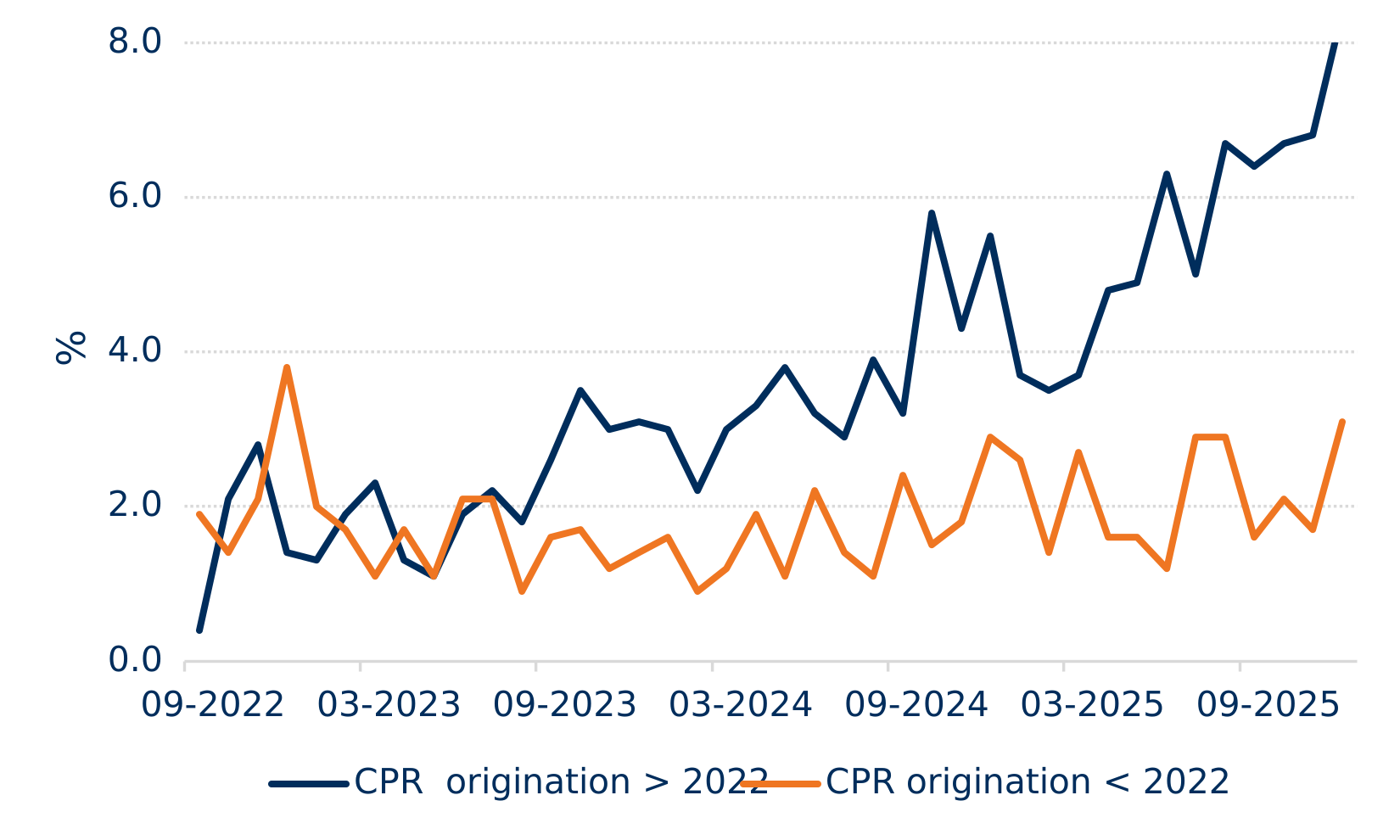
For (bank) investors, the main concern is the prepayment risk is associated with their hedging strategy. Typically, CPR is low shortly after origination and increases as the loan ages and/or approaches its interest rate reset date. Since interest rates have risen and shorter fixed-rate periods have grown in popularity from 2022 onward, CPR behaviour has become more difficult to predict. This applies especially for mortgages originated after 2022 and before mid-2024.
For these more recent originations, the increase in interest rates has led many borrowers to opt for 10-year fixed-rate periods. Given today’s interest rate environment and the remaining fixed term of loans originated in or after 2022, it is often financially unattractive for these borrowers to port their existing mortgage to a newly purchased home resulting in a higher CPR (around 8%). The table below shows the CPR development corrected for loan porting for a portfolio of mortgages originated before and after 2022.
Figure 3.3: CPR development origination date 2018 vs 2022
Source: DMPM analytics
In contrast, in the same portfolio, mortgages originated after 2018 and before 2022 show low CPR levels (around 4%). This is largely because, in this period, borrowers predominantly selected long fixed-rate periods. These 20- and 30-year terms were associated with exceptionally low interest rates at the time. With current rates now significantly higher, and given the long remaining fixed periods, it is generally advantageous for these borrowers to port their existing mortgage to a new property. Hence the impact of the interest rate at origination and the development of the market rate highly influences prepayment behaviour.
Further advances used for consumer purposes
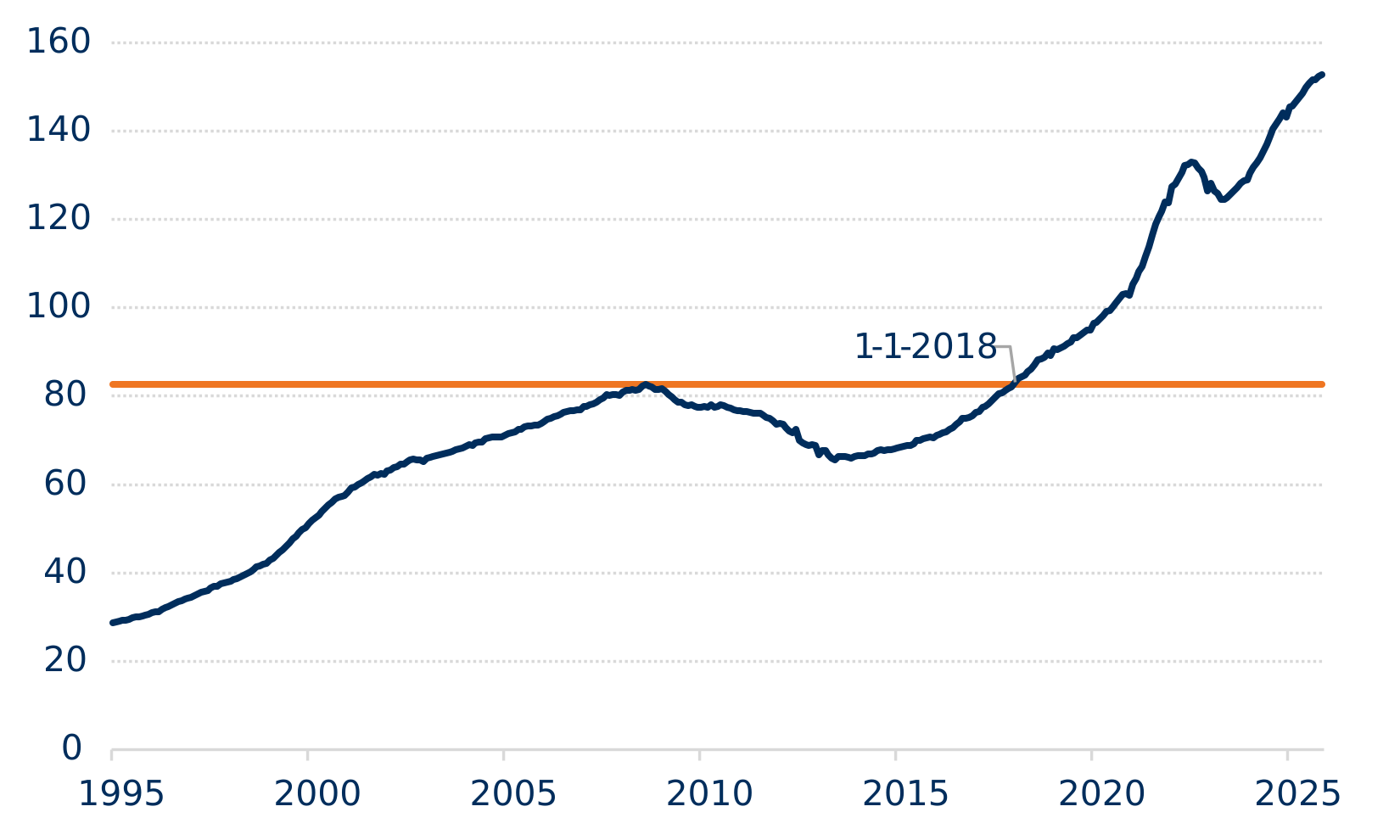
Since 2014, Dutch house prices have increased significantly, resulting in substantial equity accumulation for homeowners from 2016 onwards, following the temporary decline prior to 2014. In response, Dutch residential mortgage originators have adjusted their underwriting criteria, allowing borrowers to apply for additional loans (“further advances”) secured by their residential mortgage. While these further advances were traditionally used for home renovation and sustainabilityrelated investments, they are increasingly being used for consumer purposes.
Figure 3.4: House price index NL (2020 = 100)
Source: Statistic Netherlands, DMPM Analytics
Development of further advance applications
To properly interpret this trend, it is necessary to consider the Dutch tax framework. Since 2013, further advances only qualify for mortgage interest deductibility if the loan is redeemed according to at least an annuity schedule. Consequently, interest-only further advances are generally not taxdeductible. However, the absence of tax deductibility does not automatically imply that such loans are used for consumer spending; they may also be used for purposes such as gifts to children or home improvements, where borrowers prefer lower monthly instalments over tax benefits.
Following the sharp increase in interest rates in 2022, the financial advantage of tax deductibility for annuity mortgages almost fully offset the higher repayment obligations compared to interest-only loans. As a result, voluntarily foregoing tax deductibility in exchange for lower monthly payments became significantly less attractive. This suggests that, since 2022, the intentional rejection of tax deductibility is unlikely, as the marginal reduction in monthly payments does not outweigh the benefit of equity accumulation through redemption.
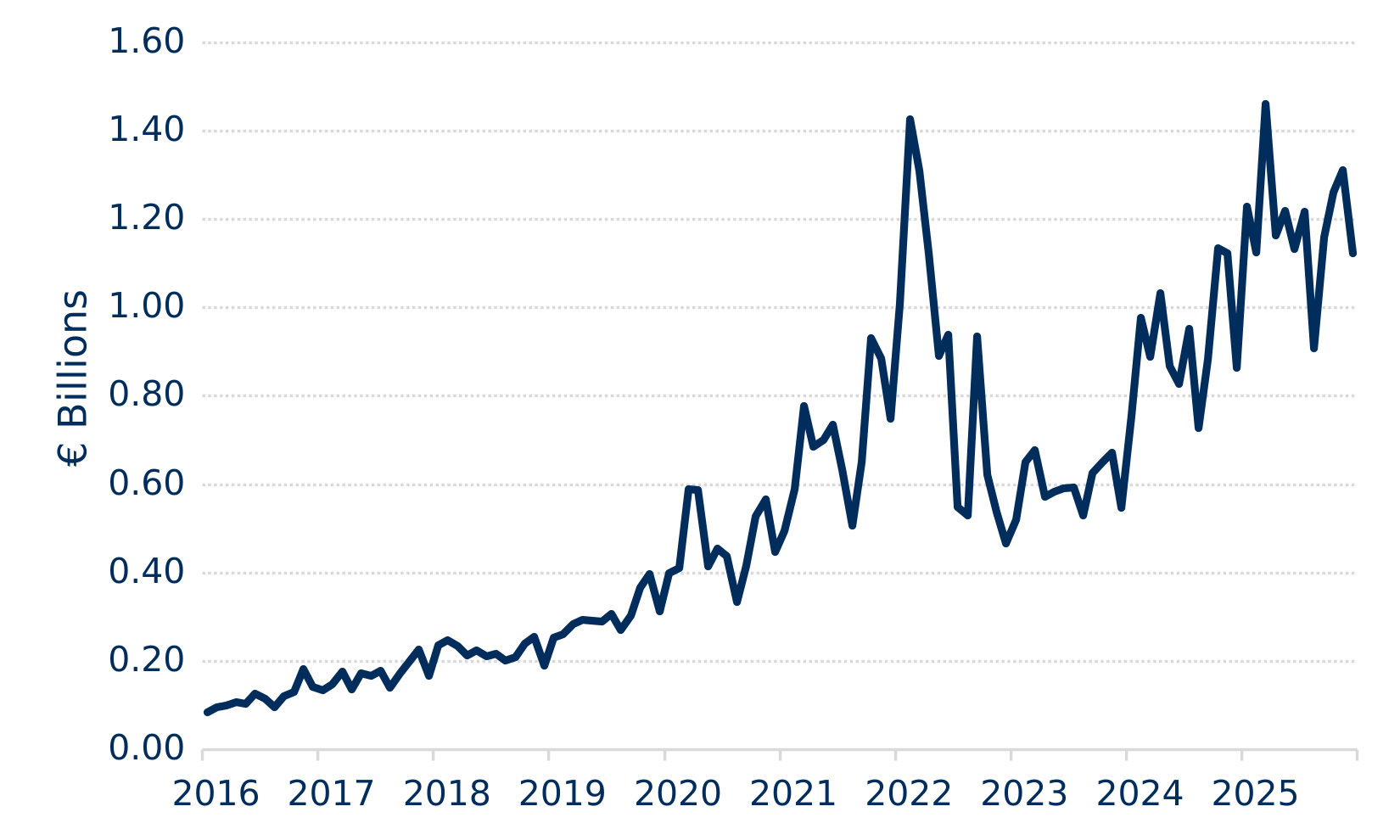
An analysis of market-wide further advance application volumes (Figure 3.5) shows a strong increase from 2018 onwards, peaking in February 2022, when interest rates rose sharply to levels that were subsequently reduced later that year. This peak was followed by a decline towards the end of 2022, with application volumes reaching approximately EUR 460 million in December.
Figure 3.5: Monthly applications further advances
Source: HDN, DMPM Analytic
Thereafter, further advance applications recovered and reached a new peak in March 2025, exceeding the previous high observed in early 2022. Volumes have remained elevated and are expected to stay at these levels, driven by (i) underwriting frameworks that permit the inclusion of consumer credit within residential mortgages and (ii) continued house price appreciation, which increases available home equity that can be released through further advances.
Use of residential mortgages to release equity for consumer purposes Currently, more than 90% of mortgage originators allow consumer credit to be embedded within residential mortgage products. The key question is whether borrowers actively use this option as property equity increases.
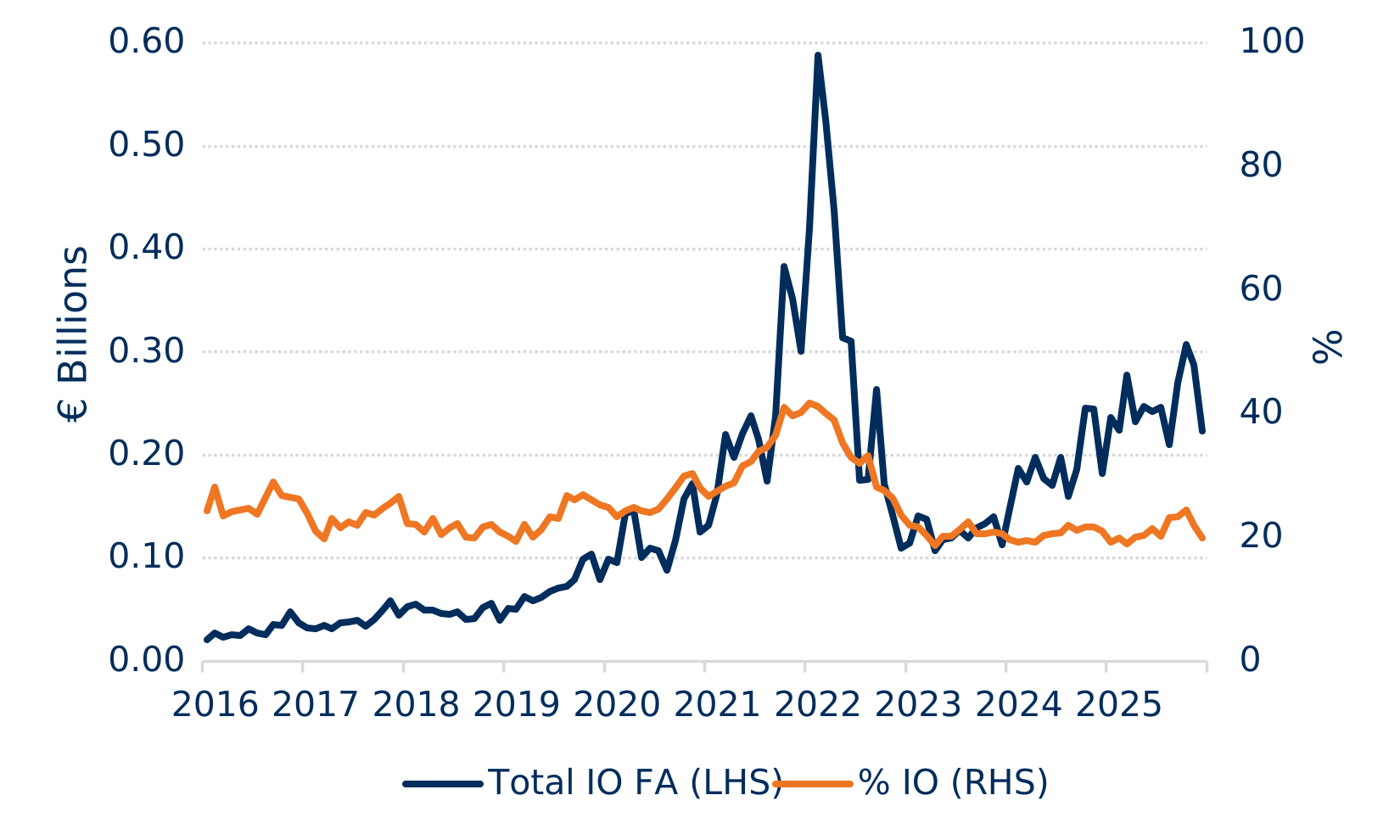
As noted earlier, interest-only further advances are highly likely to be used for consumer purposes in a broad sense, including financial support for children purchasing their first home. An analysis of interest-only further advance applications supports the conclusion that residential mortgages are increasingly used for consumer-related purposes, as the absolute volume of interest-only further advances has grown rapidly. Nevertheless, the relative share of interest-only further advances has remained broadly stable over time, with the exception of their contribution to the peak observed in early 2022.
Figure 3.6: Monthly applications interest only in further advances
Source: HDN, DMPM Analytics
Relationship between consumer mortgages and the broader consumer credit market
To assess the relevance of consumer credit embedded in residential mortgages, it is necessary to examine trends in the broader consumer credit market, excluding mortgagecollateralized lending. De Nederlandsche Bank (DNB) publishes data on total outstanding consumer credit as well as monthly origination volumes by Monetary Financial Institutions (MFIs).
As shown in Figure 3.7, the total outstanding volume of consumer credit has exhibited a structural downward trend since 2011. A pronounced peak is visible at the end of 2021 and the beginning of 2022, coinciding with the initial rise in interest rates. Since then, monthly origination volumes have stabilized at approximately EUR 400– 500 million.
Figure 3.6: Monthly applications interest only in further advances
Source: DNB, DMPM Analytics
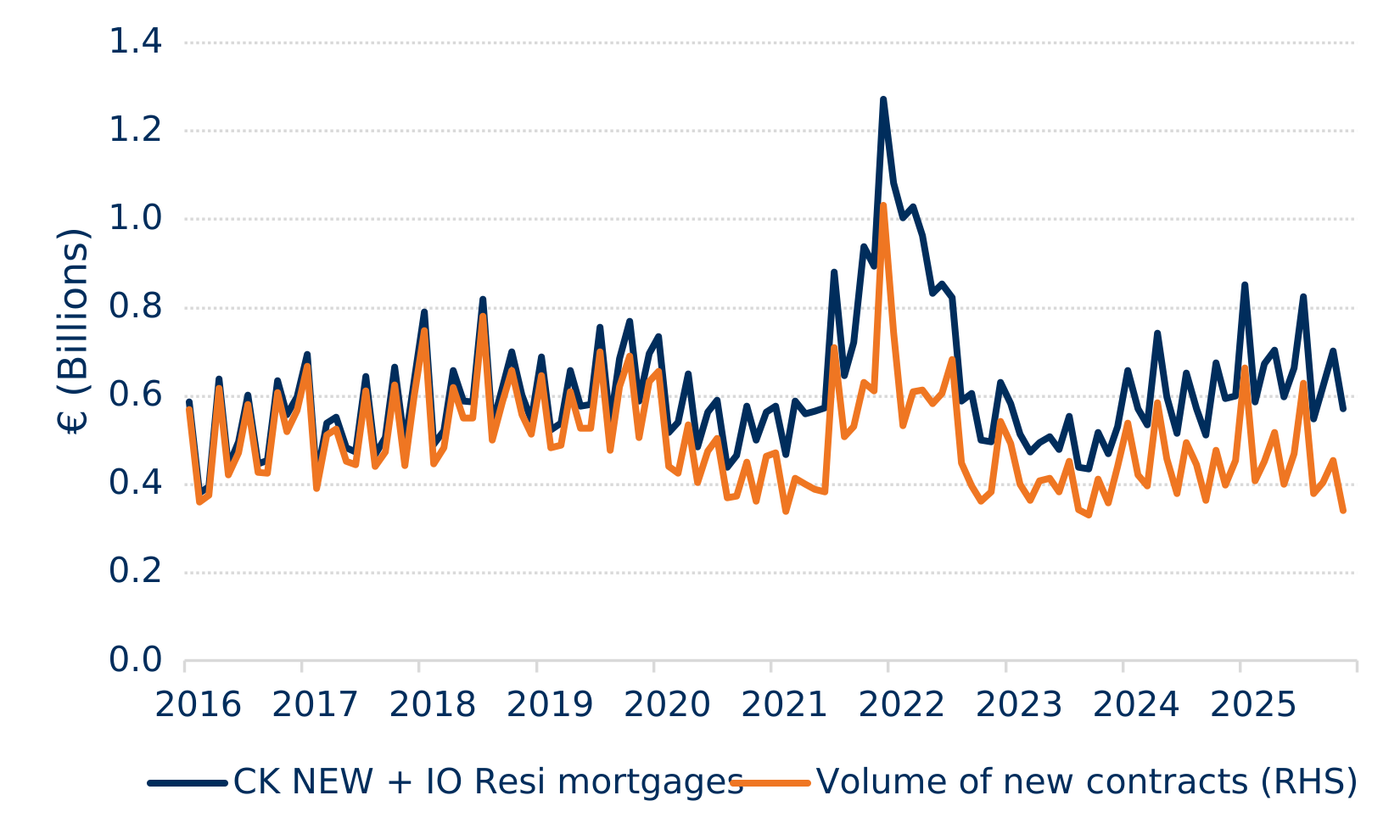
Assuming that at least the interest-only further advances within residential mortgages effectively represent consumer credit, total monthly consumer credit origination volumes may be understated and could be adjusted upward to reflect this embedded lending.
Figure 3.8: Consumer Credit Market including Consumer Credit Within Residential Mortgages
Source: DNB, HDN, DMPM Analytics
Future outlook for consumer credit within residential mortgages
Two recent developments may significantly influence consumer behaviour regarding the use of further advances for consumer purposes: Regulatory pressure from the European Central Bank (ECB) on banks to reduce their exposure to interest-only mortgages. Policy proposals from the newly formed coalition government aimed at accelerating the reduction of mortgage interest tax deductibility.
Although the most recent coalition plans intend to keep the tax regime for mortgage interest rates untouched, future diversion from this intention may influence preferred redemption types of further advances. If mortgage interest deductibility is curtailed more rapidly, consumers may increasingly favour interest-only mortgages over redeeming mortgage products, as mortgage repayment behaviour in the Netherlands has historically been strongly tax-driven. Lower or eliminated tax incentives would reduce the rationale for systematic mortgage redemption.
At the same time, banks are facing regulatory pressure to limit interest-only lending. Interest surcharges on interestonly mortgages are gradually increasing across the market, discouraging demand for these products. Some lenders already restrict mortgage loans used for consumer purposes to linear or annuity repayment structures. As a result, the availability and origination of interest-only further advances are likely to decline.
A potential countervailing force could emerge if tax deductibility is phased out more rapidly. In such a scenario, converting annuity mortgages into interest-only structures could materially reduce monthly instalments, making interest-only loans more attractive for consumers.
Nevertheless, given regulatory pressure, underwriting frameworks are expected to be further tightened, potentially discouraging or even prohibiting the origination of interest-only mortgages altogether.
While it remains uncertain how these opposing dynamics will ultimately unfold, a future market may develop for alternative products that enable homeowners to access their accumulated housing equity. The underlying consumer demand to release home equity or at least avoid forced equity accumulation through full redemption is expected to persist. We will continue to monitor these developments closely and provide updates in our Quarterly Market Updates.