
Interest-only mortgages are often perceived as riskier than annuity mortgages because no principal is repaid during the term of the loan. However, the repayment structure is only part of the picture. Borrowers who choose an interest-only mortgage may differ significantly from those who opt for an annuity mortgage.
This topic has gained renewed attention as regulators, including the European Central Bank (ECB) and De Nederlandsche Bank (DNB), have raised concerns about the long-term risks associated with interest-only lending, particularly refinancing risk at maturity. In response, several Dutch lenders have tightened their lending criteria by limiting the maximum interest-only portion of newly originated mortgages.
While these developments focus on the mortgage product itself, an equally important question remains: who are the borrowers behind these mortgage structures, and how do their characteristics influence payment behavior? Within the Dutch mortgage market, annuity and interest-only mortgages are often associated with different borrower profiles. Interest-only borrowers tend to be older and have accumulated more home equity, while annuity mortgages are more commonly held by younger households that are still building wealth through debt repayment.
Understanding these differences is essential when assessing portfolio risk. Characteristics such as age, leverage and accumulated equity can have a significant impact on payment performance and arrears behavior.
In this article, we analyze borrower profiles across different mortgage repayment structures and examine how these characteristics relate to payment morality and payment performance. Using DMPM portfolio data, we explore whether differences in payment performance are driven primarily by the mortgage structure itself or by the borrowers who choose it.
Understanding the borrower behind the mortgage
The perceived risk of a mortgage is often linked to its repayment structure. However, differences in payment performance may be driven less by the mortgage itself and more by the characteristics of the borrowers who choose it. As a result, differences in arrears behavior between annuity and interest-only mortgages may partly reflect differences in the underlying borrower population.
Figure 1
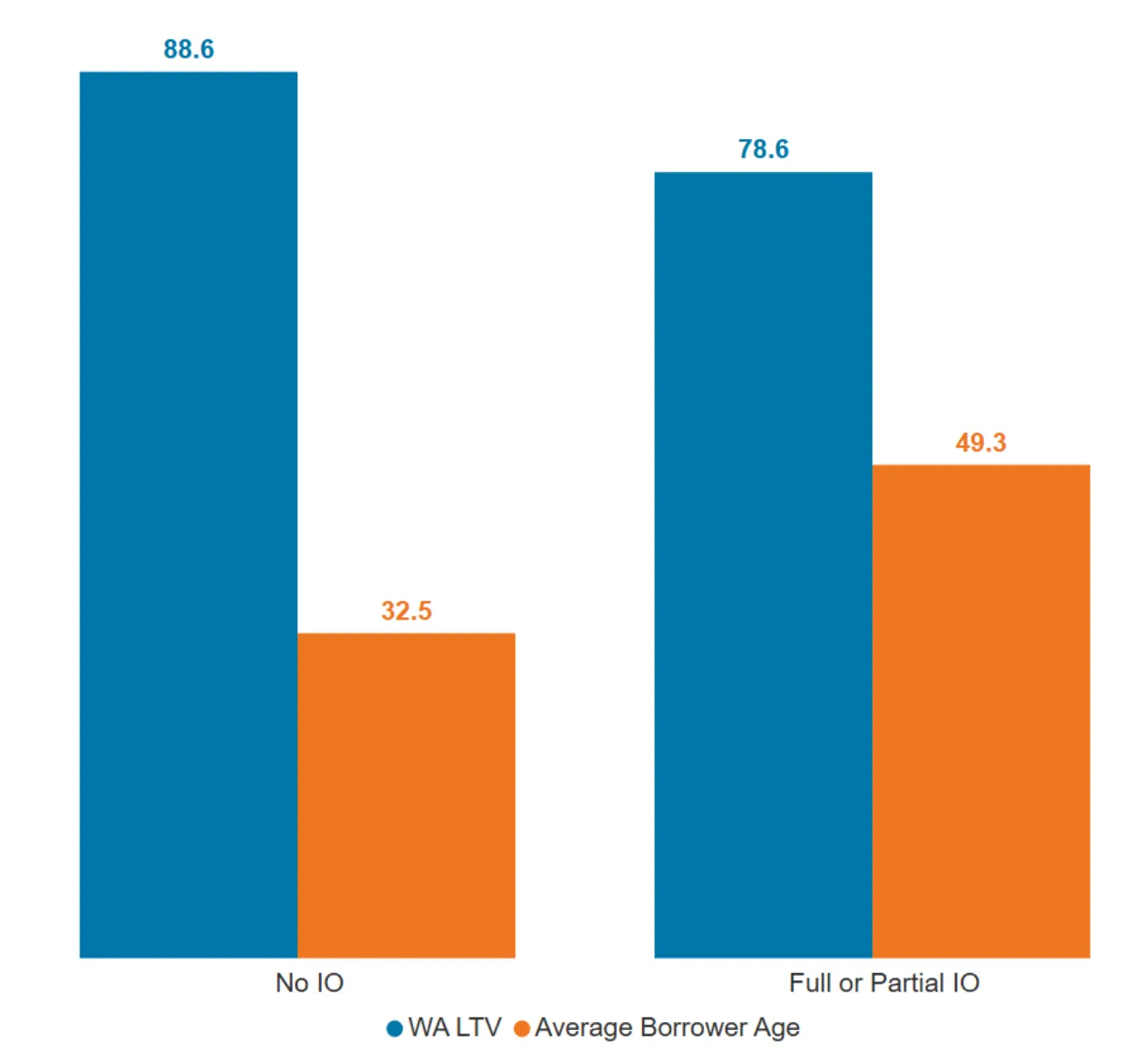
Figure 2 Average loan amount
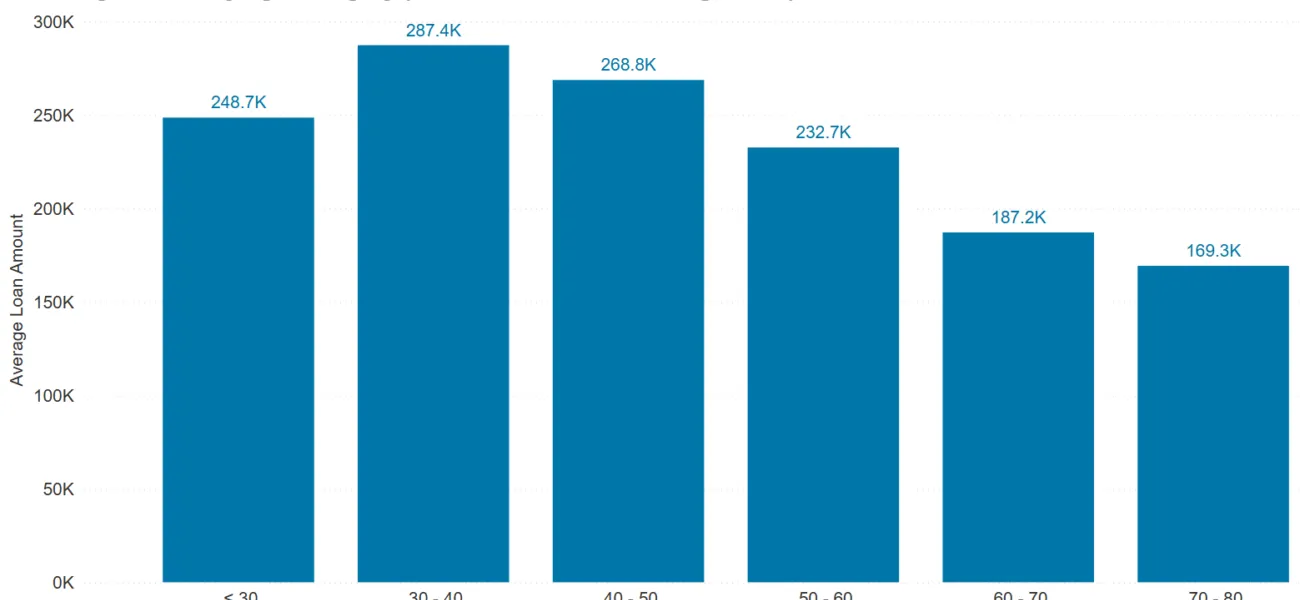
Figures 1 and 2 demonstrate that applicants with a full or partially interest-only mortgage component tend to have lower Loan-to-Value (LTV) ratios and a higher average age than applicants without an interest-only component. In addition, a clear pattern can be observed between age and borrowing requirements, with average loan amounts declining as applicants get older. This trend reflects the natural mortgage lifecycle: over time, borrowers gradually reduce their mortgage debt through scheduled repayments, while increasing housing prices often contribute to increasing levels of home equity. As a result, older borrowers typically require less financing and tend to exhibit lower mortgage balances than younger homeowners.
Figure 3: Distribution Age Catagory
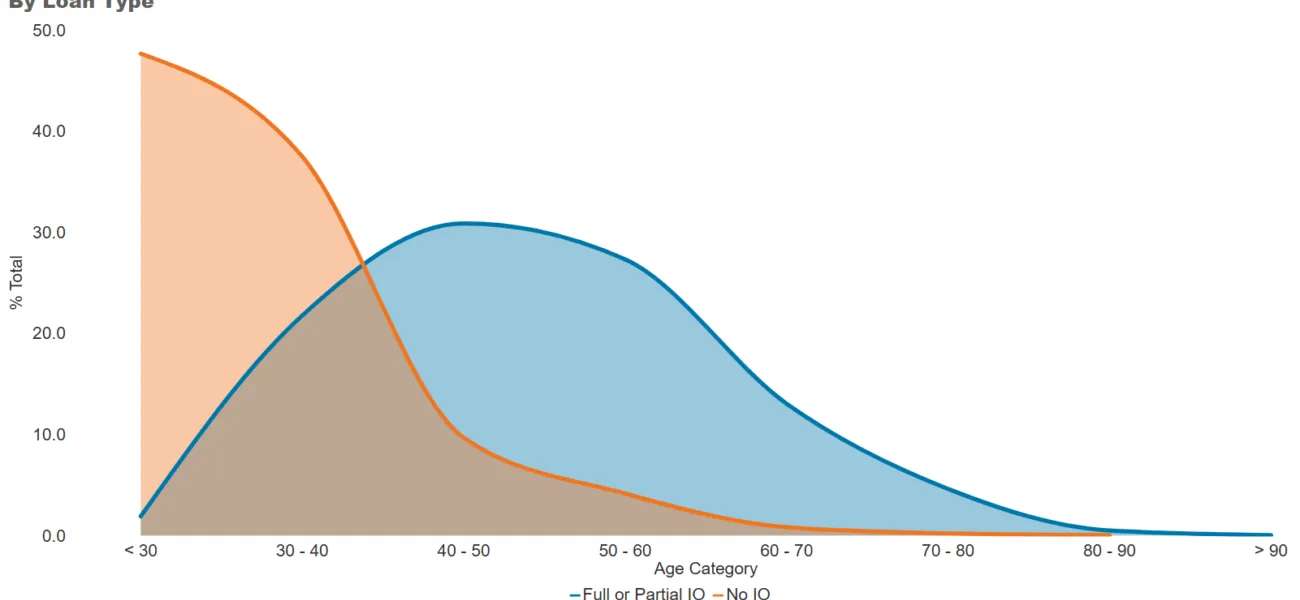
Figure 3 reinforces this observation from another perspective. Annuity mortgages are predominantly concentrated among younger age groups, while their popularity declines steadily as borrowers progress through later stages of life. This trend is partly influenced by Dutch tax regulations, which have incentivized borrowers taking out new mortgages since 2013 to choose fully amortizing mortgage structures to qualify for mortgage interest tax deduction. As borrowers age and build up equity, interest-only mortgages become increasingly common. This shift reflects both changing financing needs and a stronger equity position, which together contribute to lower leverage and lower monthly payment obligations among older borrowers.
Figure 4 WA LTV and % 10 IO
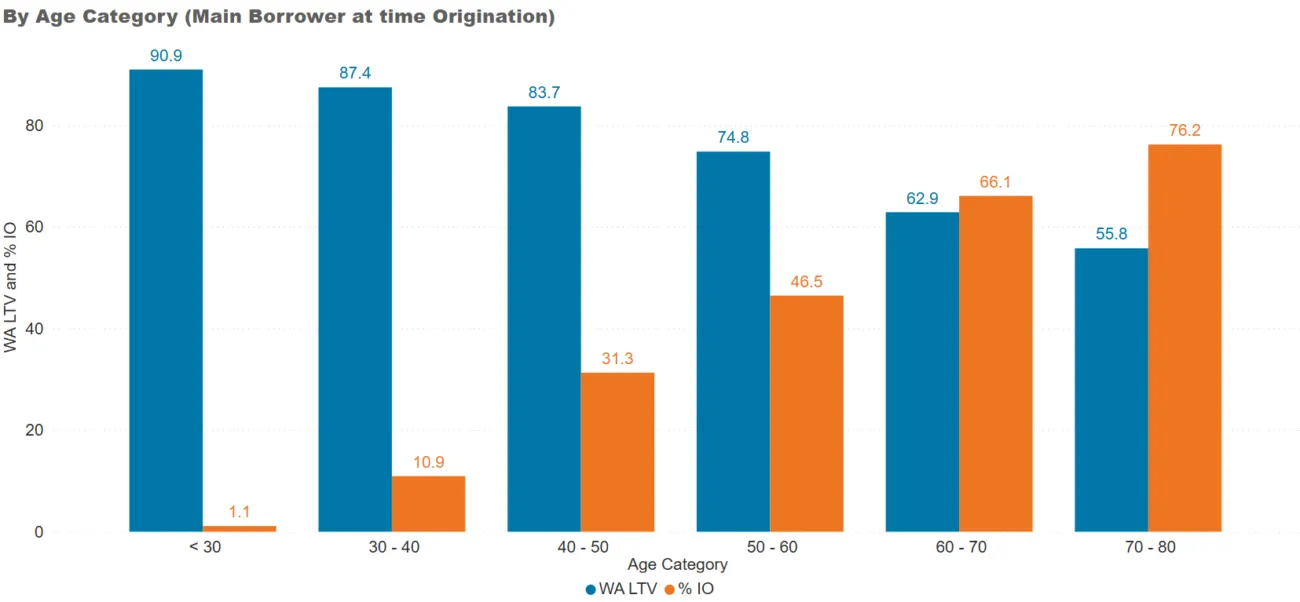
Figure 4 highlights a clear relationship between age, LTV and mortgage composition. As borrowers move into higher age categories, average LTVs decline while the average interest-only share of the mortgage increases. This suggests that older borrowers have generally built-up significant home equity over time and therefore rely less on mortgage financing. The growing use of interest-only financing may also reflect a preference for lower monthly housing costs and greater financial flexibility. As a result, a higher interest-only share appears to be associated with a more mature borrower profile focused on preserving financial stability rather than maximizing borrowing capacity.
From borrower profile to payment behavior
The preceding analysis highlights that annuity and interest-only mortgages are associated with distinctly different borrower profiles. Borrowers with a higher interest-only share tend to be older, have lower average LTVs and generally require smaller loan amounts. These characteristics suggest that interest-only mortgages are often concentrated among households that have accumulated substantial home equity and are at a more advanced stage of their financial life cycle.
While these findings provide valuable insight into the composition of each borrower’s segment, they also raise an important follow-up question. Do these differences in borrower characteristics translate into different payment behavior? More specifically, does a borrower population characterized by higher age, lower leverage and greater accumulated equity demonstrate stronger payment discipline than borrowers with predominantly annuity mortgages?
To answer this question, the next section examines payment morality across the various mortgage segments.
Figure 5 % in arrears EOM
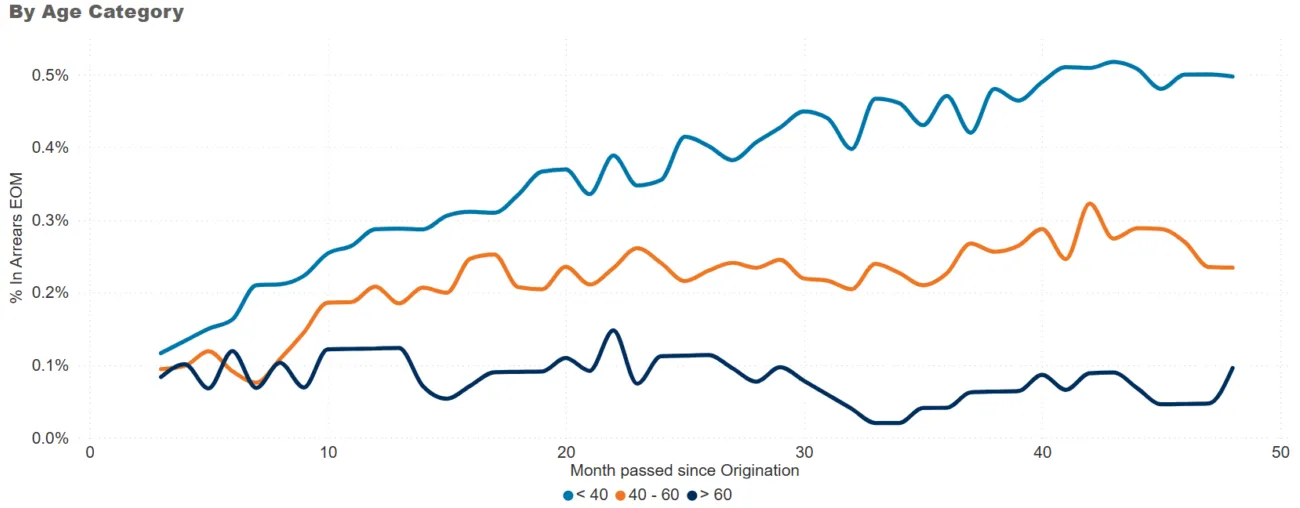
Figure 5 highlights a clear relationship between borrower age and end-of-month (EOM) arrears levels, with payment performance improving as borrowers move into higher age categories. Borrowers under the age of 40 exhibit the highest arrears rates, followed by the 40-60 age category, while borrowers aged over 60 consistently show the lowest levels of arrears.
This pattern is likely linked to differences in life stage and income stability. Borrowers over 60 are more likely to receive pension income, which generally provides a predictable and stable source of cash flow. Combined with lower financing requirements, this may contribute to the stronger payment performance observed within the oldest age segment. Conversely, younger borrowers are often at an earlier stage of their housing and career development, making them more sensitive to changes in their financial circumstances.
Figure 6 % in arrears EOM
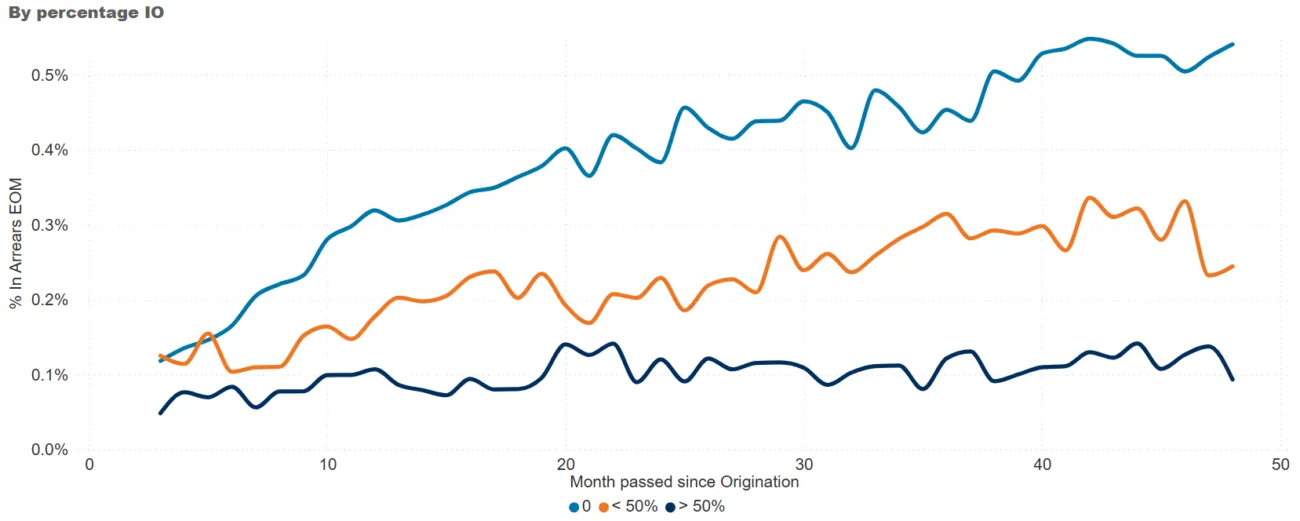
This finding is consistent with the trends observed in the previous analyses. Borrowers opting for a mortgage with an interest-only component are, on average, older, have lower LTV ratios and require less financing. As a result, the observed reduction in arrears appears to coincide with a borrower population that is generally further advanced in its financial life cycle and characterized by lower levels of leverage.
Conclusion
When viewed together, these findings suggest that interest-only mortgages are generally not concentrated among highly leveraged borrowers, but rather among households with a stronger financial position. Lower LTVs, smaller financing needs and reduced monthly payment obligations are all characteristics of borrowers who appear focused on maintaining financial stability and preserving financial flexibility.
This distinction is particularly relevant given the increased regulatory attention for interest-only mortgages. While lenders subject to ECB supervision may be required to further reduce their exposure to interest-only lending due to concerns around long-term refinancing risk, the observed borrower characteristics tell a more nuanced story. The lower arrears levels seen throughout this analysis suggest that interest-only mortgages are often held by financially resilient borrowers with strong payment behavior.
For investors that are not directly subject to these supervisory requirements, the results provide little evidence that a higher share of interest-only mortgages automatically leads to higher delinquency rates. On the contrary, the findings indicate that payment performance appears to be driven at least as much by the characteristics of the borrower as by the repayment structure of the mortgage itself.