
INDEX
DUTCH ECONOMY
Higher rates for longer
DUTCH HOUSING MARKET
Early signs of a moderating housing market
DUTCH MORTGAGE MARKET
The Dutch mortgage market under pressure
Want to keep up to date with the latest market insights and data?
Visit our data insights page: https://dmmi.dmpm.nl.
Do you have any questions about the information in this document, or are you interested in exploring Dutch residential mortgage investments?
Send an email to info@dmpm.nl.
DUTCH ECONOMY
Higher rates for longer
Swap rates seeking higher grounds
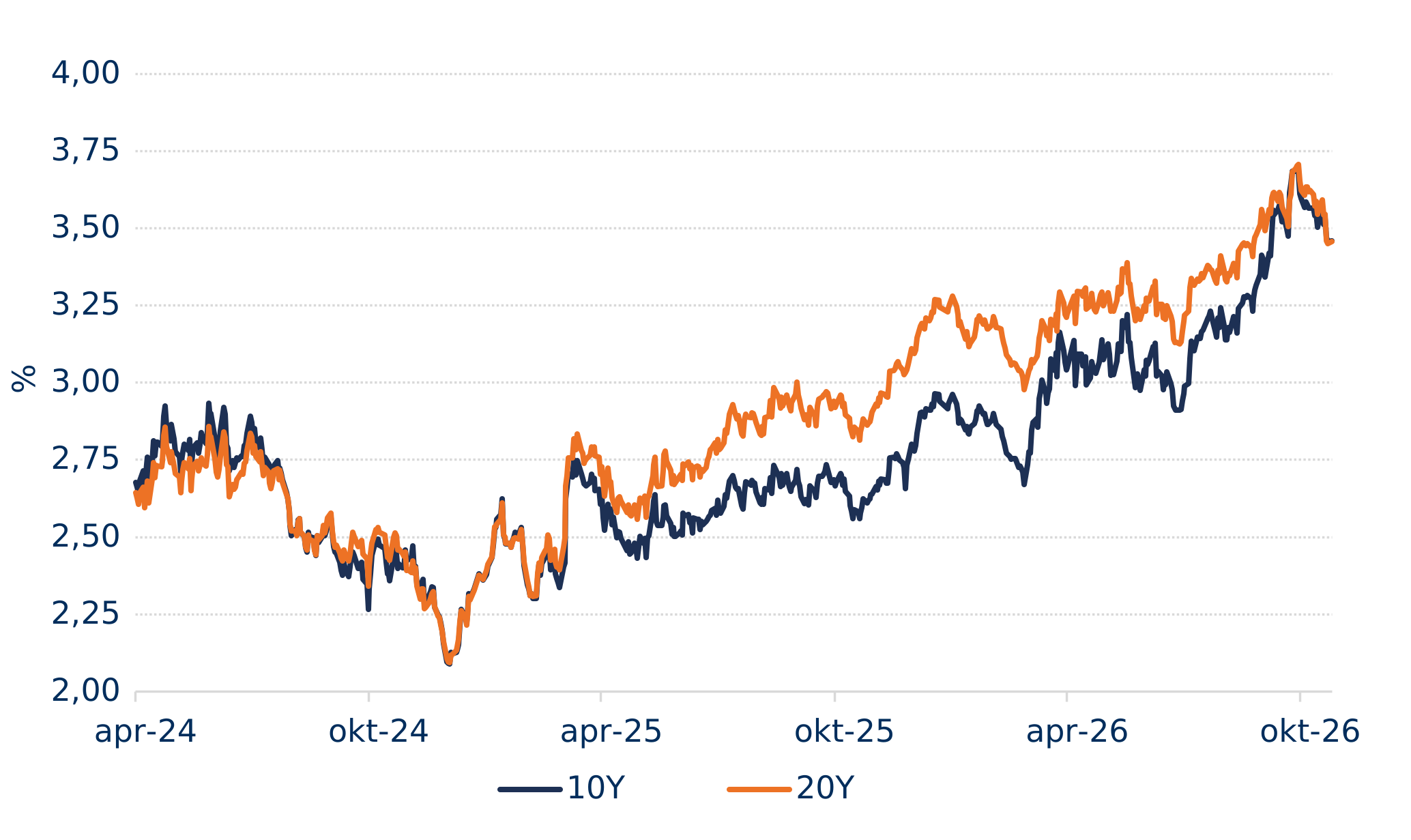
Capital market rates moved sharply higher during the third quarter. That holds for both German government bond yields and swap rates. The swapspread, (difference between e.g. 10Y swaps and the 10Y government bond yield) barely moved during the quarter. Therefore, higher swaps rates are 1 to 1 the result of higher German government bond yields. The 10Y swap started the third quarter at 2,90% and moved more than 80bp up to 3,70%, before moving back to around 3,50% at the end of October, see figure 1.1.
Figure 1.1: 10 and 20 years swap rate
Source: DMPM analytics
Why did rates move higher?
There are a number of factors that caused the move upwards of capital market rates. Firstly, due to increasing energy prices, inflation moved up significantly.
The latest eurozone CPI reading from September is 3,8%, almost double compared to the 2.0% target of the ECB. Due to the higher inflation and inflation expectations, the market repriced the future ECB deposit rate expectations and therefore also capital market rates move up.
Secondly, specific to Germany. Germany announced in March 2025 that it would no longer limit the amount of fiscal spending by respecting their Schuldenbremse. The German Schuldenbremse was enshrined in the German constitution. Removing this rule is therefore a historical event. In other words, the credit quality of Germany needed to be repriced by the market, causing rates to move up. Thirdly, the extra spending on defense, infrastructure and climate measures was funded by a significant increase in the issuance of government bonds.
Germany issued in 2025 €425bn and in 2026 Germany will likely issue €512bn, which is a massive and historical increase of 20% in one year. This extra issuance needed to be absorbed, and that only could be done at higher rates.
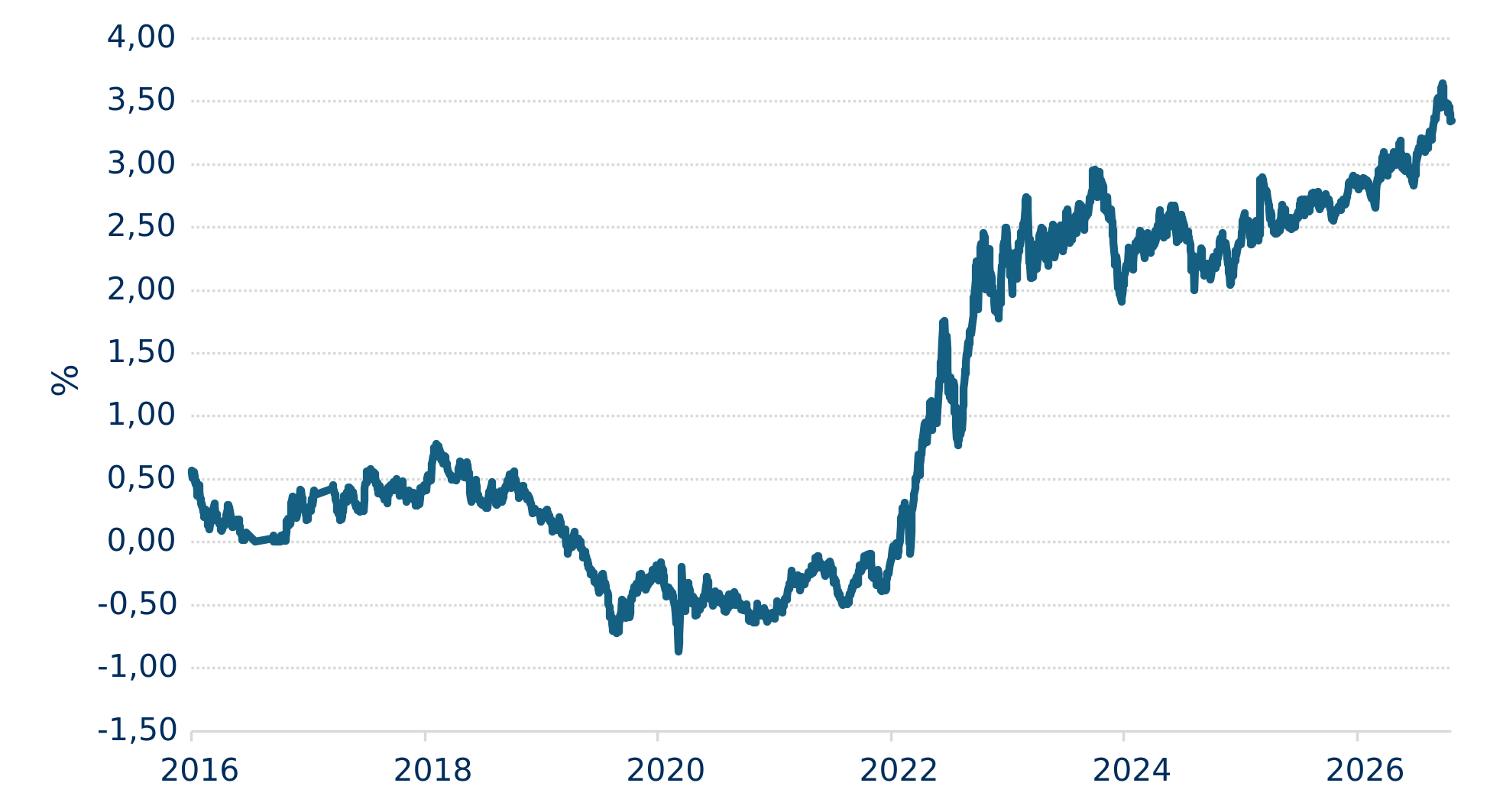
Lastly, bond yields of other large nations, like the U.S. Japan and the UK, also moved up sharply as a result of large budget deficits that are likely to continue. Government bond markets of the large countries tends to follow each other, causing also German bond yields to increase, see figure 1.2.
Figure 1.2: German Bund
Source: DMPM analytics
The 10Y and 20Y swap rates are equal
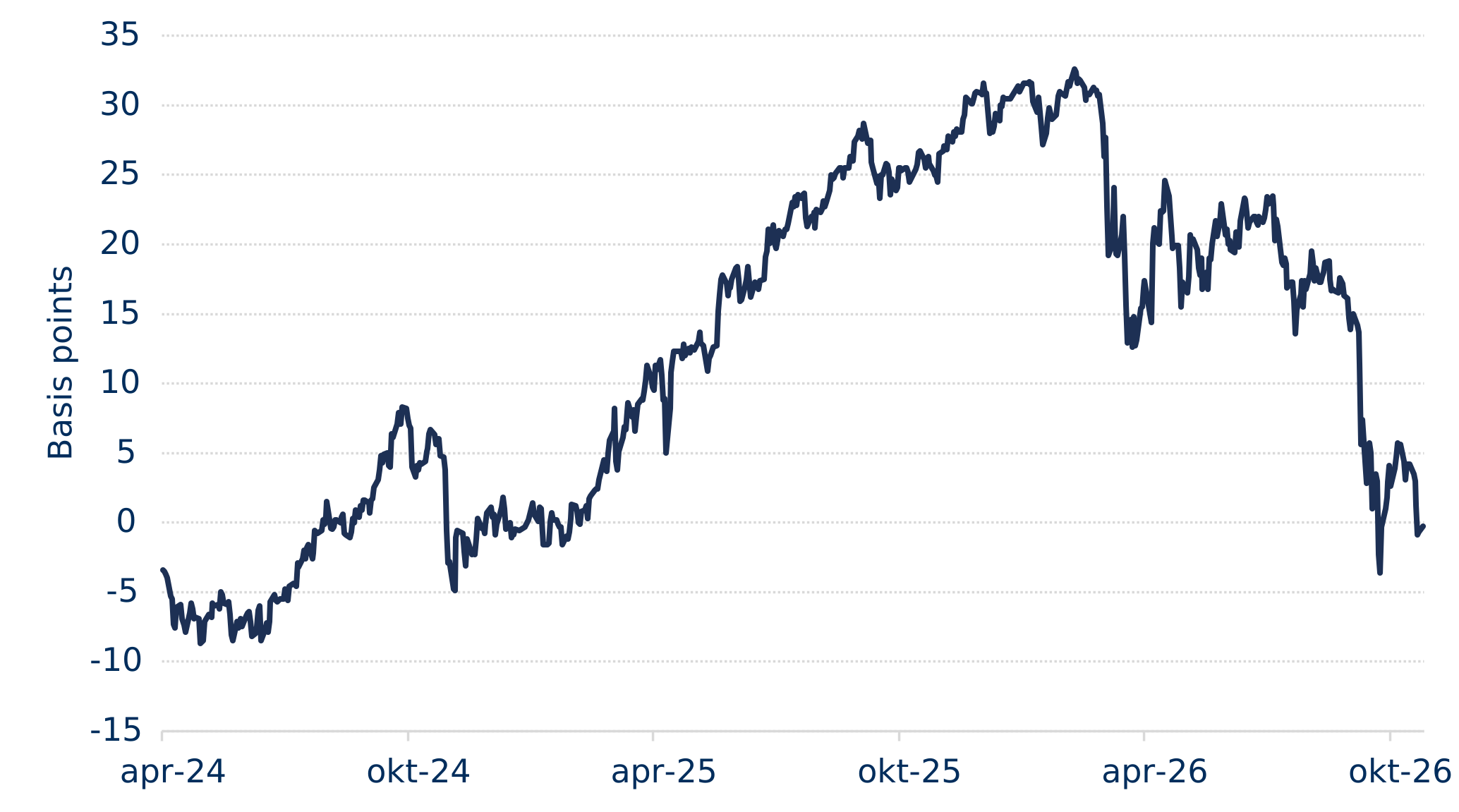
Figure 1.1 above also shows that the 10Y swap rate moved up more aggressively than the 20 year swap rate, causing a flattening of the swap curve. The difference between the 20Y swap rate and 10Y swap rate declined significantly in 2026, from 30bp in January to 0bp in October, see figure 1.3. In 2024 this spread was also around 0bp. What are implications of this reduction in curve spread?
For that, we would like to present mortgage investors an opportunity in the next paragraph.
Figure 1.3: Curve spread between 10 year and 20 year swaps
Source: DMPM analytics
Opportunity in 20 year mortgages
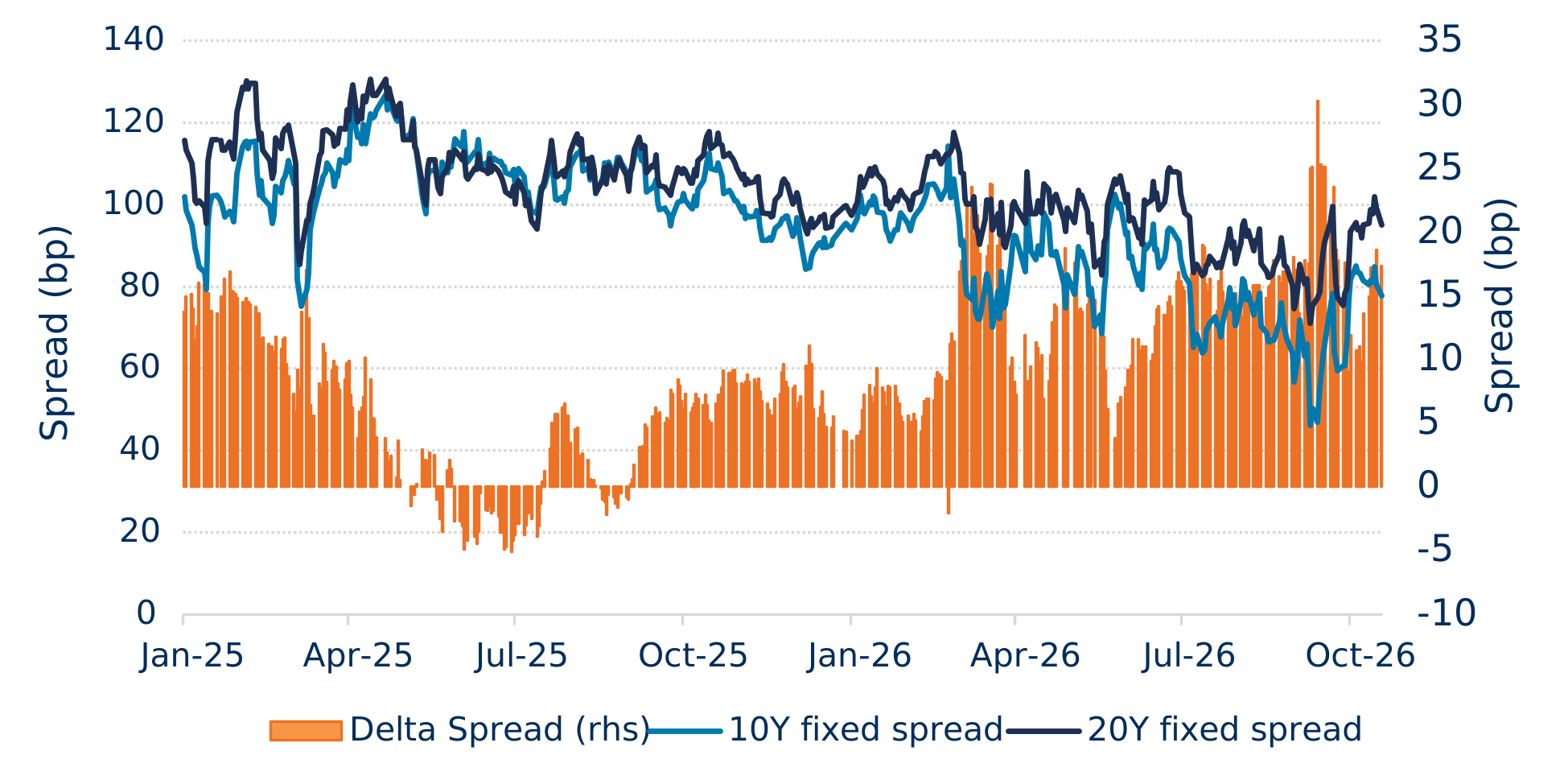
Figure 1.4 below in blue the NHG 10Y and 20Y mortgage spreads. What is clear is that both spreads declined steadily since the start of 2025. But the decline in the 10Y mortgage spread is more pronounced. The difference in these two spreads is visualized in orange in figure 1.4. In the middle of 2025, the mortgage spread difference between 10 and 20Y was close to zero. In other words, a longer maturity but no additional return. But in 2026 that changed. The spread difference is trending upwards, it briefly touched 30bp, but the additional return is currently somewhere between 15 and 20bp. For those investors that have some leeway in their tactical or strategic asset allocation, the 20 year fixed interest rate mortgage provides an attractive pickup compared to the standard 10 year fixed interest rate mortgage.
Investors do need to take into account, that between 80% and 85% of purchase applications have a fixed interest term of 10 years. The 20 year market is, ignoring other fixed interest terms, only 5% of the purchase application market. Sourcing enough volume from this subsection of the market could prove challenging.
Figure 1.4: Delta 20Y NHG Spread vs 10Y NHG Spread
Source: DMPM Analytics
ECB on hold in October
The ECB hikes the deposit rate by 25bp to 2,50%. According to the ECB, the risk to the eurozone economic growth is tilted to the downside, and the risk to the inflation outlook is tilted to the upside. In general, the outlook is heavily clouded by significant global uncertainties. Knowing this and given that there haven’t been any improvements in this regard, it is rather surprising that according to market expectations, the ECB will likely keep rates on hold in their October meeting. Most market participants, likely BNP Paribas, ABN AMRO, ING, do expect a December hike of 25bp.
Wage growth declines further
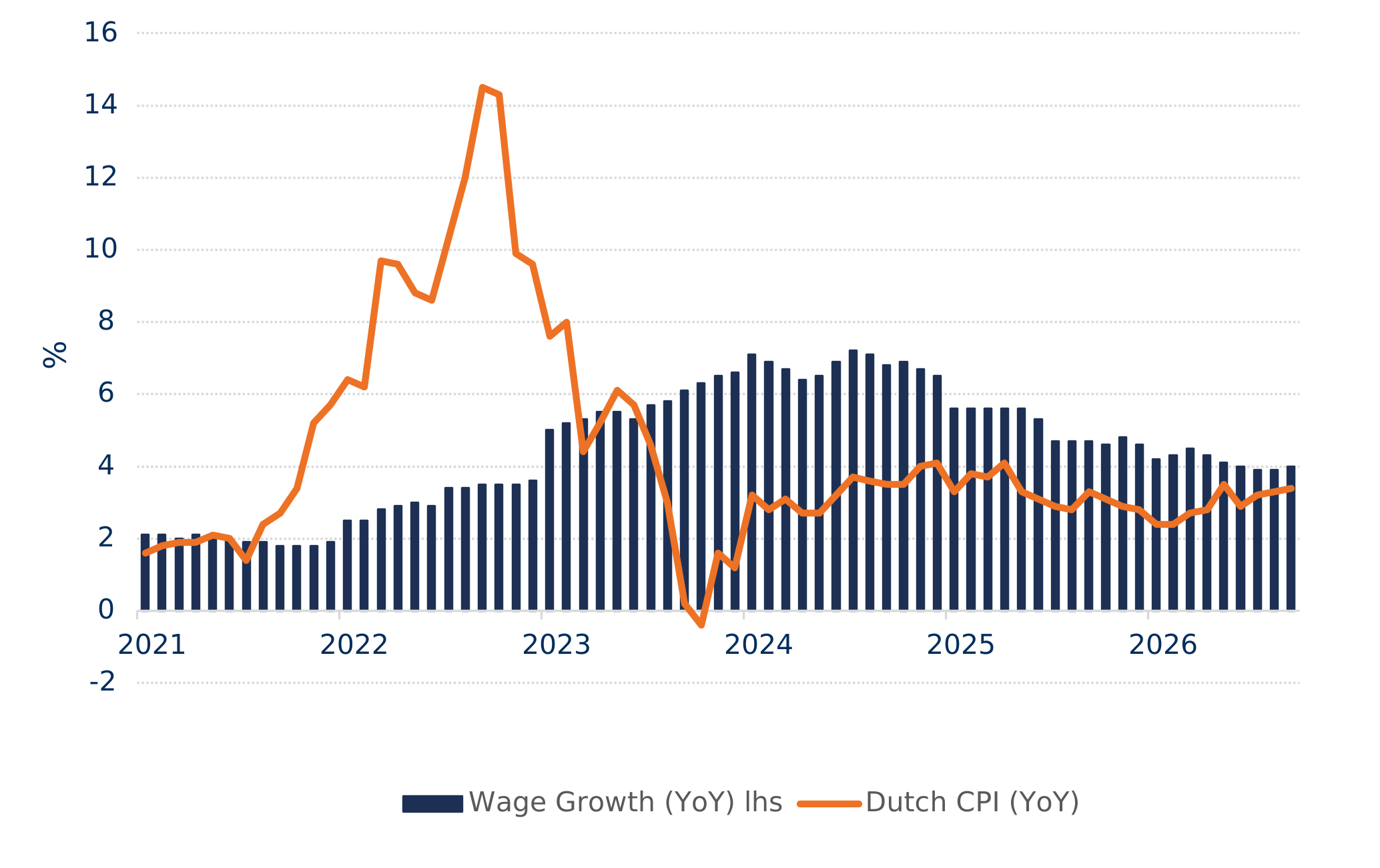
We have mentioned this in earlier Quarterly reports but the decline in wage growth is continuing. In 2022 there was a significant spike in the rate of inflation (figure 1.5) and the wage growth started to increase not much later. Inflation returned to normal levels rather quickly, and from 2024 it moved between 2,5 and 4%. But wage growth is much stickier. It peaked at the end of 2024 at 7% and declined to 4% in September 2026. Figure 1.5 also shows wage growth is still elevated compared to the inflation rate. Therefore, it will likely decrease further to a level closer to inflation.
Figure 1.5: Wage growth vs the rate of inflation
Source: DMPM Analytics
DUTCH HOUSING MARKET
Early signs of a moderating housing market
During the third quarter of 2026, buyers generally benefited from a broader range of opportunities than in previous years. While market conditions continued to gradually moderate, underlying demand for housing remained strong. The structural housing shortage therefore continued to be an important driver of market activity, supporting transaction volumes despite a somewhat less favourable financing environment.
More homes became available for sale during the quarter, resulting in increasing options for buyers. The increase in supply was partly driven by private investors selling rental properties, continuing a trend that has been visible over the last quarters. Despite this increase, available housing stock remains insufficient to meet demand, with competition remaining strong within the more affordable segments of the market.
House prices declined slightly on a quarter-on-quarter basis. One factor contributing to this trend has been the increase in mortgage rates during the quarter.
Higher financing costs have reduced borrowing capacity for many households and have put some pressure on affordability. As a result, house price growth appears to be gradually cooling after a long period of strong increases.
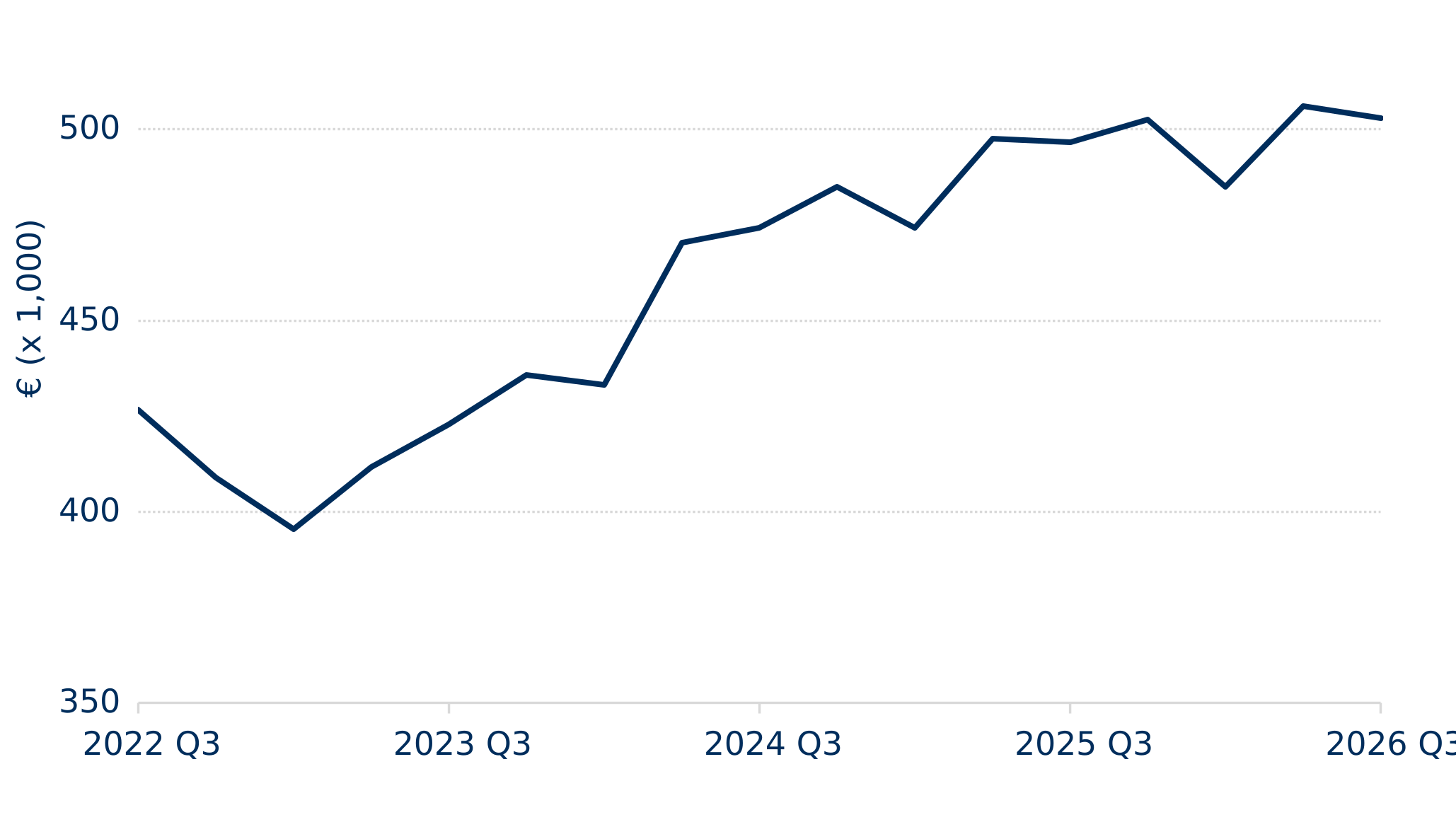
Nevertheless, average transaction prices remained above the level recorded one year earlier. According to NVM, the average transaction price reached €503,000 in Q3 2026, representing a year-on-year increase of 1.8%.
Figure 2.1 shows that average house price remains close to historical highs. Compared to the strong increases seen in 2024 and 2025, house price growth has slowed in recent quarters. Higher mortgage rates during Q3 2026 have reduced affordability and borrowing capacity for many households, which may partly explain the slower pace of price growth.
Figure 2.1: Average house price development
Source: NVM
Despite this moderation, market conditions remain relatively tight. Approximately 67% of all transactions were completed above asking price during the quarter. Homes sold within an average of 31 days, while the supply-demand ratio stood at just 2.8, indicating that buyers still had relatively limited choice. These indicators suggest that demand continues to exceed available supply across large parts of the market.
Overall, current market conditions point towards stabilisation rather than a material correction. While affordability challenges remain relevant and financing conditions have become less attractive, the structural housing shortage continues to provide support to house prices.
Transaction volumes remain at a high level
Despite the increase in available supply, transaction activity remained strong during the third quarter.
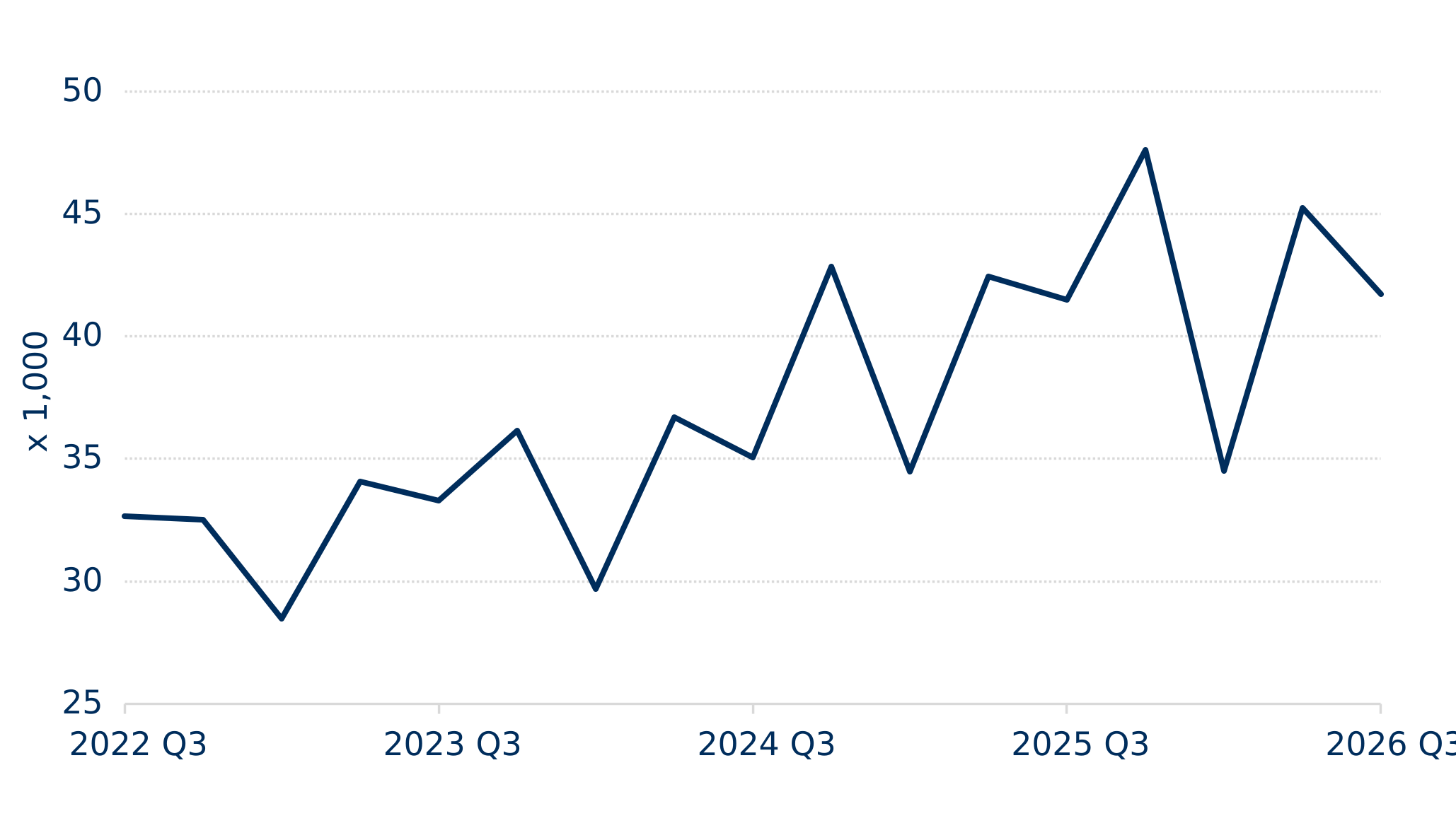
Figure 2.2 shows that the number of homes sold remains at a relatively high level. Despite the increase in available supply, newly listed properties continue to be absorbed relatively quickly by the market.
Figure 2.2: Number of houses sold
Source: NVM
The combination of additional supply and sustained buyer interest has supported the fact that the number of houses sold was at a high level of almost 42,000 houses sold via NVM brokers during the third quarter.
Due to increasing supply, buyers have benefited from a larger selection of properties. On the other hand, sellers still manage to sell their properties rather quickly.
Although transaction activity has stabilised compared to the strong growth observed during 2025, the market continues to perform at a high level compared to historical standards.
Affordability remains under pressure
Affordability remains one of the key challenges within the Dutch housing market. Over recent years, house prices have increased significantly, making it increasingly more difficult for many households to enter the owner-occupied housing market.
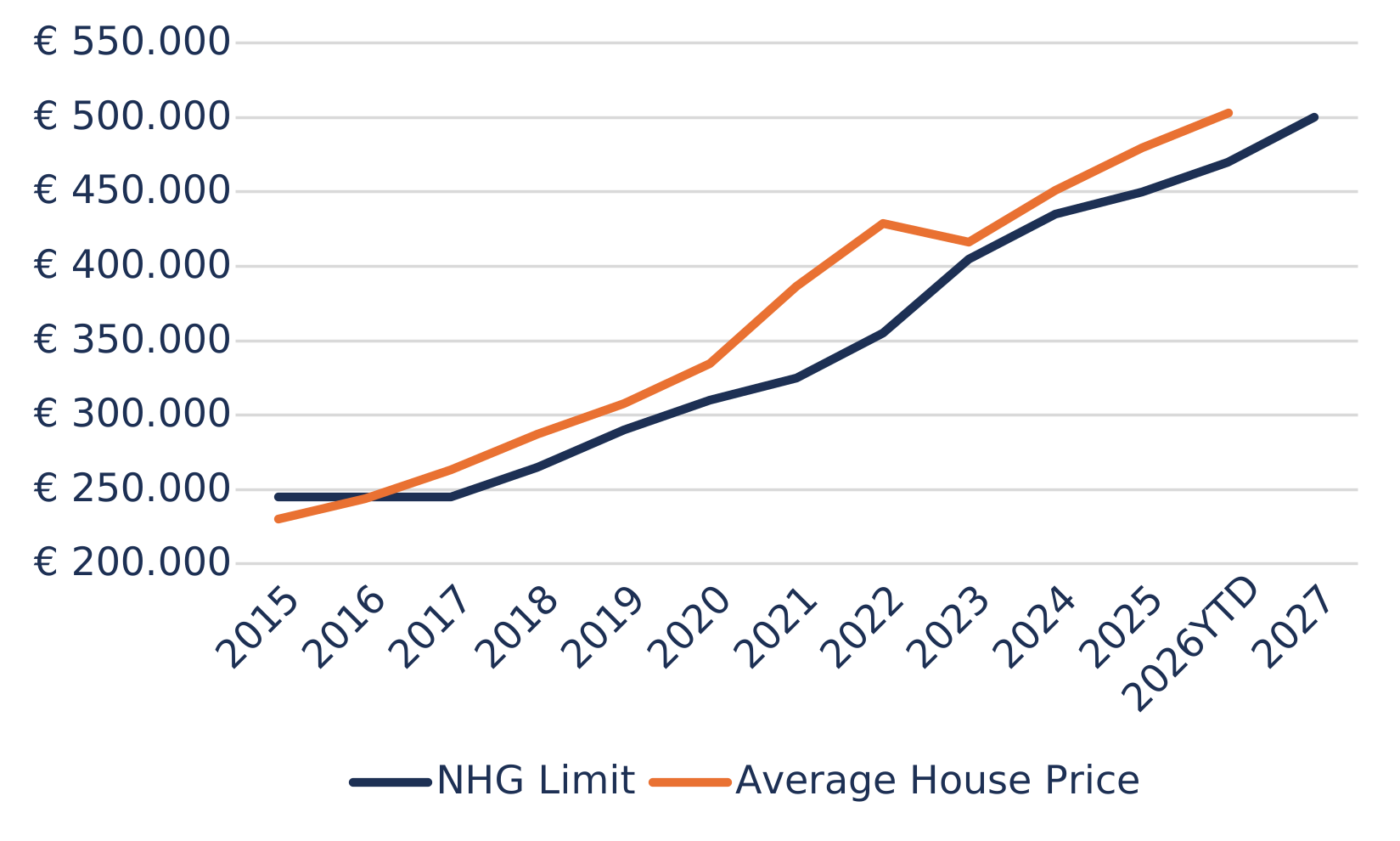
As shown in Figure 2.3, both average transaction prices and the NHG limit have increased substantially over time. While the announced increase in the NHG limit to €500,000 for 2027 has reduced part of the gap between both measures, house prices have generally risen at a faster pace over recent years.
Figure 2.3: NHG limit versus average house price over time
Source: Statistics Netherlands, NHG
New-build market faces growing challenges
The increase in new-build supply is a positive development given the persistent housing shortage in the Netherlands.
However, the fact that the number of newly available homes continues to increase while sales volumes have declined in recent quarters presents a somewhat surprising development. In a market characterised by a structural housing shortage, it would be expected that newly built homes are absorbed relatively quickly.
This suggests that the challenge is no longer the quantity of new-build homes being delivered, but increasingly the type of housing being brought to market. A significant share of recent developments consists of apartments, while demand remains strong for family homes. As a result, supply and demand do not always appear to be aligned, contributing to an increasing stock of new-build homes.
Affordability remains another important challenge. New-build homes are generally priced well above comparable existing homes, driven by higher construction costs and increasingly stringent sustainability requirements. At the same time, house price growth in the existing housing market has slowed, reducing the relative attractiveness of new-build properties for many owner-occupiers.
In addition, new-build projects are often associated with longer lead times and uncertainty regarding actual completion dates. Buyers are required to commit to a property that may not be delivered for several years, while delays remain a common risk. For homeowners looking to move, this can result in substantial bridging costs and additional financing uncertainty. Combined with higher purchase prices, this may make existing homes a more attractive alternative.
While increasing new-build production remains essential to address the structural housing shortage, recent developments suggest that simply delivering more homes is not sufficient. The type of housing delivered, its affordability and the certainty offered to prospective buyers are becoming increasingly important factors in determining the success of new-build projects.
As a result, many households continue to face affordability constraints, particularly in regions where house price levels are significantly above the national average. Although wage growth and a strong labour market continue to provide some support, purchasing a home remains challenging for many first-time buyers.
The combination of limited supply, elevated house prices and higher mortgage rates is expected to keep affordability under pressure in the coming quarters.
DUTCH MORTGAGE MARKET
The Dutch mortgage market under pressure
ECB regulation, flattening yield curves and rising mortgage rates
The Dutch mortgage market is undergoing a period of significant change. Increasing regulatory scrutiny from the ECB, a flattening yield curve, and rising mortgage rates are collectively reshaping lending conditions, bank profitability, and housing market dynamics.
Increasing impact of ECB regulation on mortgage underwriting
The impact of ECB supervision on the Dutch mortgage market is becoming increasingly visible. Guidelines relating to risk management, property valuations, and capital requirements are increasingly being translated into stricter mortgage underwriting criteria. One example is the growing use of additional valuation tools such as Calcasa Plus. Mortgage lenders are more frequently requiring additional substantiation of a property's value to reduce the risk of overvaluation.
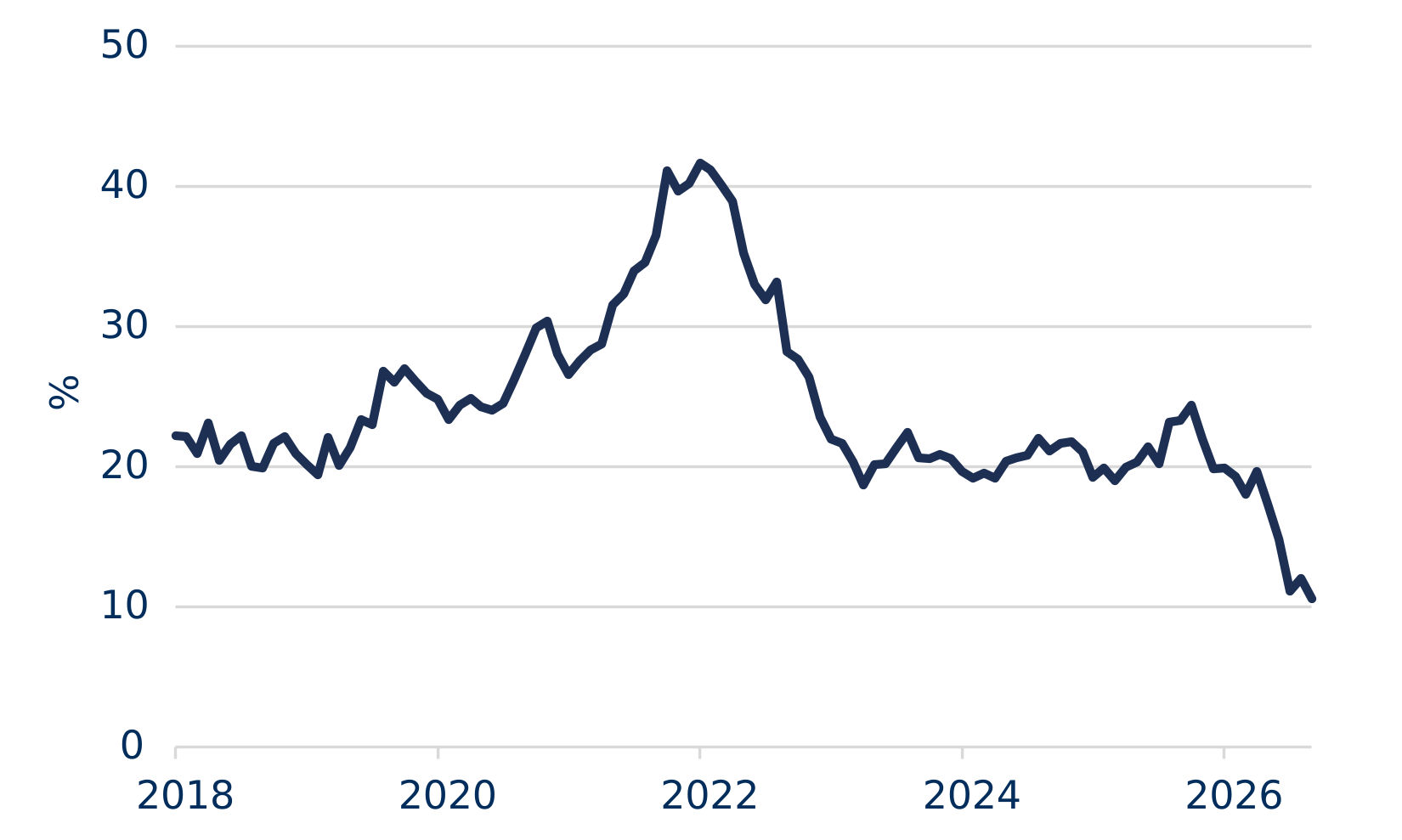
The effects are also evident in interest-only mortgages. Various lenders have introduced higher interest rate surcharges or have reduced the maximum interest-only portion of a loan, in line with supervisory objectives aimed at reducing reliance on interest-only debt structures. Impact is particularly visible in the sharp decline in the proportion of interest-only further advance applications since Q1 of this year.
Figure 3.1: Percentage interest-only further advance applications
Source: DMPM Analytics
In addition, stricter income and affordability assessments, greater emphasis on property sustainability, and more critical reviews of exceptions to standard underwriting criteria are becoming increasingly common.
As a result, the focus is shifting from maximizing lending capacity to ensuring the long-term sustainability of mortgage financing.
For consumers, this often means increased documentation requirements and more rigorous assessments. The trend is clear: regulatory expectations and risk management considerations are playing an increasingly important role in mortgage underwriting policies, with the influence of the ECB becoming more apparent in day-to-day mortgage lending practices.
Banking institutions are dominating the Dutch mortgage market
Banking institutions currently hold a dominant position in the Dutch mortgage market. This is clearly reflected in consumers' preference for shorter fixed-rate periods. In September, the share of mortgage applications with a fixed-rate period of ten years or less reached a record high of 89.6%. Banks are less dependent on the capital markets for their funding than non-bank mortgage lenders. They primarily finance mortgages through customer deposits. As savings rates remain relatively low, banks benefit from a stable and cost-effective source of funding. This enables them to offer more competitive mortgage pricing, while margins for non-bank lenders continue to come under increasing pressure.
When looking at the development of the most frequently selected fixed-rate periods over the past ten years, a remarkable shift becomes evident. Between 2016 and 2018, the share of mortgages with a ten-year fixed-rate period remained stable at around 45%. From 2019 onwards, this share declined significantly in favor of fixed-rate periods of 20 years or longer. This trend culminated in a low point in February 2022, when the share of ten-year fixed-rate mortgages fell to just 18.9%. Since then, however, the market has experienced a strong reversal. The popularity of the ten-year fixed-rate period has increased sharply, reaching the highest level recorded to date of 89.6% in September 2026.
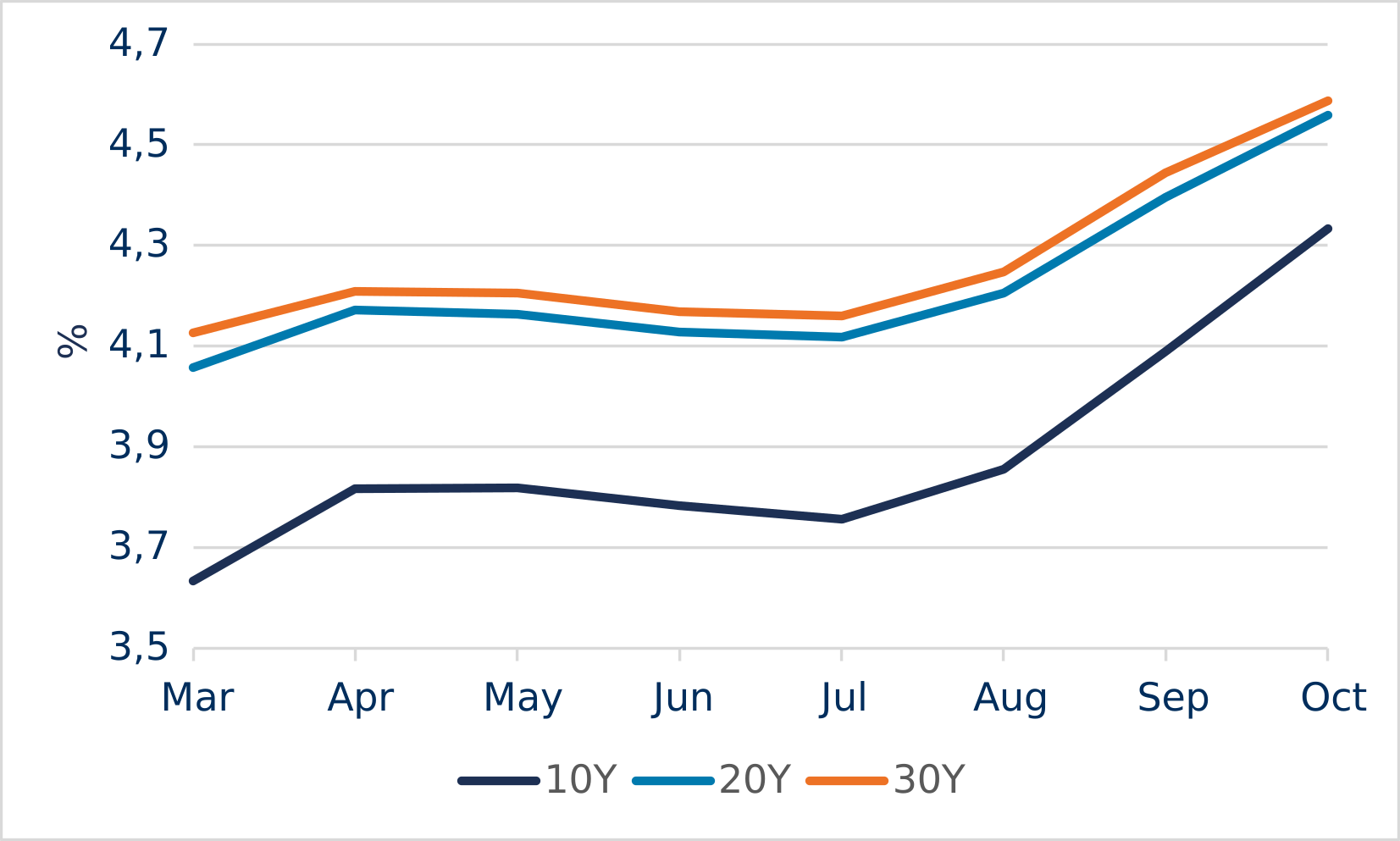
Mortgage rates continue to rise since March 2026
Since March 2026, mortgage rates in the Dutch market have been on a clear upward trajectory. While rising mortgage rates are often viewed as a financial market indicator, their impact extends much further. Higher borrowing costs directly affect affordability, household purchasing power, housing market activity, and ultimately house price growth.
Figure 3.2: Average mortgage rate (top 5 NHG providers)
Source: Renteadministratie.nl, DMPM Analytics
Rising rates are reducing affordability
The most immediate consequence of higher mortgage rates is a decline in affordability. As financing costs increase, households can borrow less for the same level of income while monthly mortgage payments rise. For example, at a mortgage rate of 4%, households can typically borrow approximately 15% to 20% less than at a rate of 1.5%, assuming unchanged income levels. A reduction in borrowing capacity has the potential to constrain purchasing power and make market entry more difficult for some prospective buyers. If affordability pressures persist or intensify, this could gradually affect demand for owner-occupied housing, potentially resulting in lower transaction volumes and a slowdown in market activity over the longer term.
Higher rates lead to lower prepayments and reduced mobility
The effects of rising rates extend beyond new borrowers. Existing mortgage holders with historically low fixed-rate mortgages have little incentive to refinance or move. As a result, prepayment rates and refinancing activity decline, causing mortgage portfolios to remain outstanding for longer periods. For lenders and investors, this typically translates into lower Conditional Prepayment Rates (CPR) and longer portfolio durations. At the same time, many homeowners are reluctant to give up mortgage rates that are significantly below current market levels. Moving to another property often requires financing at a substantially higher rate, increasing monthly housing costs. This phenomenon, commonly referred to as the lock-in effect, could become more pronounced towards 2027. As homeowners may remain reluctant to give up existing mortgage rates that are lower than prevailing market rates, mobility within the housing market could be constrained, potentially limiting the number of properties brought to market.
Housing market activity likely to moderate
Higher mortgage rates create downward pressure on housing demand, but the lock-in effect simultaneously restricts supply. Combined with the ongoing housing shortage in the Netherlands, these opposing forces are likely to prevent a significant correction in house prices. Instead, the most probable outcome is a moderation in housing market activity and a gradual slowdown in house price growth. Transaction volumes may weaken, but structural supply constraints continue to provide support for rising house prices.
Moving toward a more balanced market
Despite the weakening impact of higher financing costs, a rapid transition to a traditional buyer's market appears unlikely. Several structural factors such as persistent housing shortages, strong wage growth, low unemployment and continued population growth, continue to underpin housing demand. These factors suggest that the market is more likely to evolve toward a better balance between buyers and sellers rather than a full buyer's market.
The relationship between property transactions and mortgage rate development in the Netherlands
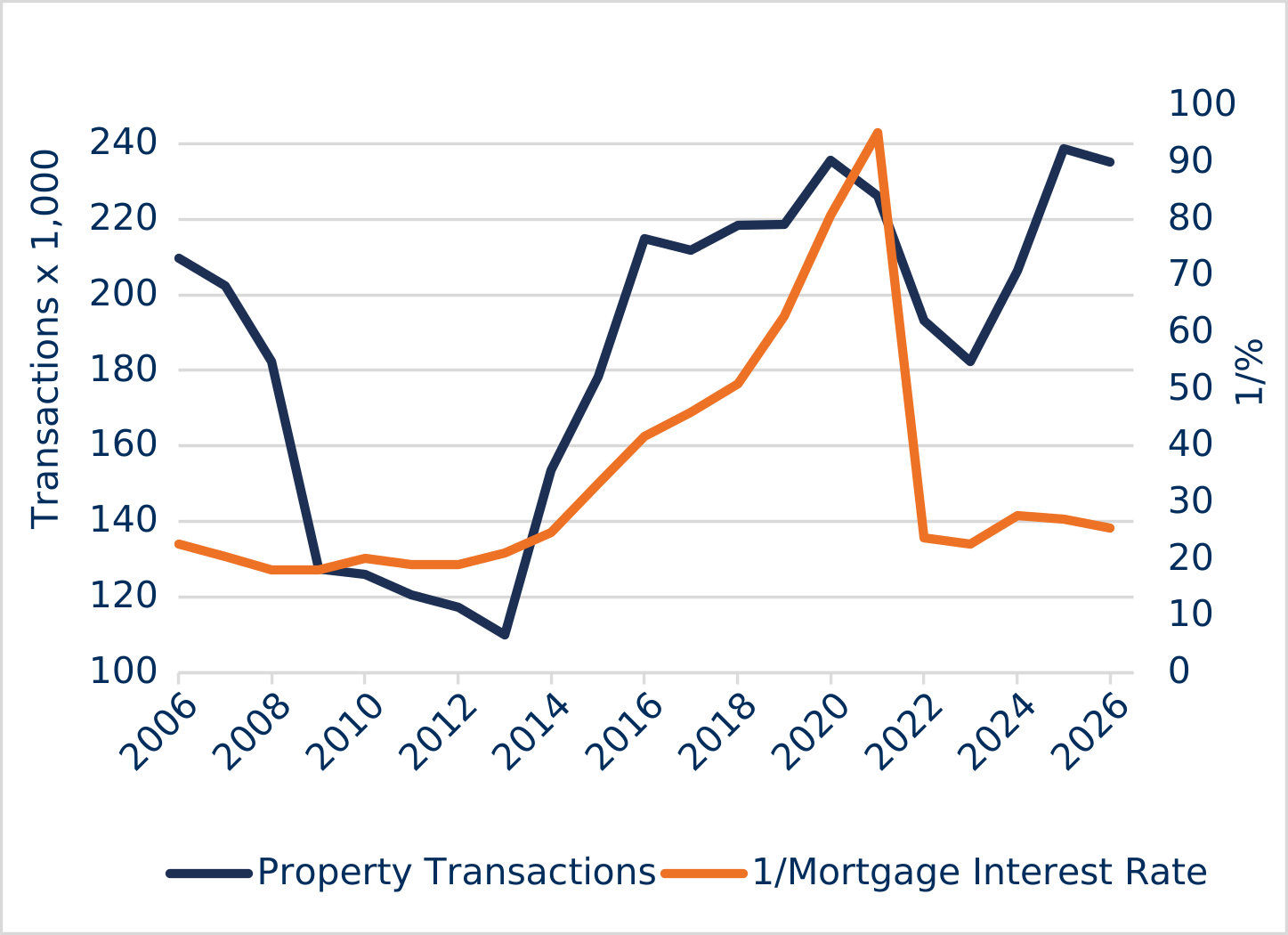
Based on the chart, there appears to be a strong inverse relationship between property transactions and mortgage interest rates (represented as 1/Mortgage Interest Rate, meaning that a higher orange line corresponds to lower mortgage rates).
Figure 3.3: Property transactions versus 1/mortgage interest rate
Source: Statistics Netherlands (CBS), DMPM Analytics
Note: Because transaction data for Q4 2026 is not yet available, the actual volumes recorded during the first nine months have been extended to a twelve-month period to provide a full-year forecast.
Over the past two decades, Dutch property transaction volumes have generally shown a strong inverse relationship with mortgage interest rates. As mortgage rates declined, housing affordability improved and transaction volumes increased. Conversely, rising mortgage rates typically led to lower market activity.
Following the Global Financial Crisis, annual property transactions fell sharply from approximately 210,000 in 2006 to around 110,000 in 2013. Economic uncertainty, tighter lending criteria, and weaker consumer confidence all contributed to this decline, while mortgage rates remained relatively high and offered limited support to the market. Between 2013 and 2021, the housing market experienced a strong recovery. Transaction volumes more than doubled to around 235,000 transactions, driven in large part by historically low mortgage rates. Lower borrowing costs increased affordability, boosted purchasing power, and stimulated demand for housing. This trend reversed in 2022 and 2023 when mortgage rates rose rapidly. As financing costs increased, property transactions fell from approximately 230,000 to around 185,000. The decline highlighted the sensitivity of housing demand to mortgage affordability and borrowing costs.
The market, however, has recovered strongly since 2024. Transaction volumes have returned to roughly 235,000-240,000 despite mortgage rates remaining well above the lows seen in 2020 and 2021. This suggests that structural factors are increasingly supporting housing demand, including persistent housing shortages, population growth, rising household incomes, and improving consumer confidence. Overall, the data indicates that mortgage rates remain an important driver of housing market activity. Nevertheless, the recent recovery demonstrates that supply constraints and demographic demand have become increasingly more influential. As a result, the Dutch housing market appears to be less sensitive to interest rate movements today than it was in previous cycles.
Get in touch
For questions about this publication or about our services, feel free to reach out to info@dmpm.nl or +31(0)10 242 2400.