
This year's Budget Day focused on several long-term challenges facing the Netherlands, including economic growth, migration, housing, infrastructure and the ongoing nitrogen discussion. The government emphasised the need for investment and highlighted the importance of removing bottlenecks that are holding back both economic activity and housing construction, such as improving permit issuance. At the same time, economic growth is expected to slow to around 1.2% in 2027, while purchasing power is projected to decline slightly.
While these ambitions are encouraging, many of the challenges discussed on Budget Day have been on the political agenda for years. In addition, these plans have been presented by a minority government, meaning support from opposition parties will be needed before many of the proposals can be implemented.
DMPM closely follows these developments. The key question for investors is therefore not whether the challenges are understood, but whether the proposed solutions will lead to meaningful improvements in housing supply and affordability.
Key takeaways
- Housing remains one of the government's key priorities.
- More housing construction remains a stated objective.
- The government wants to speed up permit approvals linked to nitrogen regulations.
- Purchasing power is expected to decline by 0.1% in 2027, limiting support for mortgage affordability.
Housing receives renewed attention
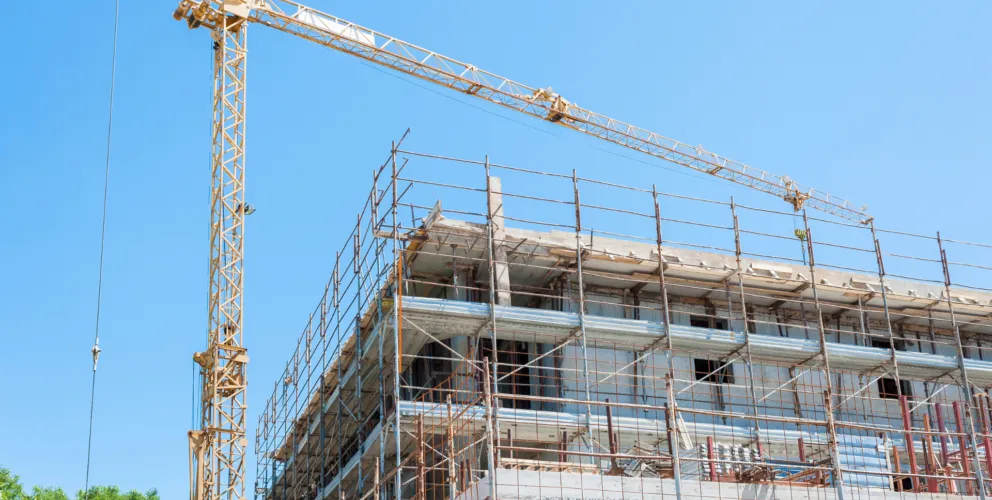
Housing was one of the main topics during this year's Budget Day. The government acknowledged that the housing shortage remains a major challenge and highlighted the need to address the issues that continue to hold back housing construction.
The Dutch housing market continues to face a significant housing shortage. Demand remains strong, supported by population growth, household formation and a relatively healthy labour market.
Although unemployment is expected to increase slightly in 2027, labour market conditions remain relatively strong by historical standards and continue to support housing demand.
Nitrogen policy remains the key bottleneck
A recurring topic today was the need to address nitrogen regulations that are slowing down housing construction. According to the government, permit issuance must improve to create room for housing, infrastructure and business activity.
From a housing market perspective, this is perhaps the most relevant message of Budget Day. While additional funding and policy initiatives can help, new homes ultimately require permits before construction can start.
Investors should nevertheless remain cautious. Similar ambitions have been expressed by previous governments, while housing completions have consistently fallen short of political targets. The direction of policy appears logical, but execution remains uncertain.
Recognition of the problem is not the same as solving it
The government has announced several measures aimed at increasing housing supply. A total of €7 billion has been allocated to accelerate housing construction, including €2.95 billion for municipalities to support the development of affordable homes. In addition, €500 million has been made available to private investors to support the development of affordable rental housing. The package also includes €635 million for housing suitable for elderly residents, on top of the €420 million that was previously allocated for this purpose.
These measures clearly demonstrate the government's commitment to increasing housing supply. However, funding alone is unlikely to solve the housing shortage. The bigger challenge remains obtaining permits, finding suitable locations and converting plans into completed homes. Labour shortage in the construction sector and electricity grid congestion in certain regions continue to place additional pressure on housing delivery.
Slight decline in purchasing power, limited impact on mortgage affordability
Unlike last year, Dutch households are expected to see a slight decline in purchasing power in 2027. On average, purchasing power is projected to decrease by 0.1%. Pensioners are expected to benefit from a modest increase of 0.3%, while lower-income households see a 0.2% improvement. Middle- and higher-income households are expected to experience a small decline in purchasing power.
While the impact is limited, mortgage affordability is unlikely to benefit from rising purchasing power as it did in previous years. Wage growth remains positive, but household finances are expected to stabilise rather than improve.
Conclusion
Budget Day 2026 demonstrates that the government recognises many of the right challenges. Housing shortages, bottlenecks and slower economic growth are all receiving attention.
However, many of these ambitions have been mentioned before. The housing market does not suffer from a lack of plans, but from a lack of delivery.
Notably, Budget Day contained few measures that directly impact mortgage lending or homeownership. The focus remains mostly on increasing housing supply, highlighting once again that the main challenge facing the Dutch housing market is not demand, but the ability to build.
The outlook continues to be supported by a structural housing shortage and strong demand for housing. However, these proposals come from a minority government and still require broader political support before they can be fully implemented.
The key question is therefore not only whether the government can move from ambition to execution, but also whether it can secure sufficient political support to do so.